Dumpster Diving in Cybersecurity: How Discarded Data Becomes a Security Risk

Quick Answer
Dumpster diving in cybersecurity is the practice of recovering sensitive information from discarded documents, devices, or digital media. Attackers can use this data for phishing, identity theft, impersonation, social engineering, fraud, and data breaches.
Why Discarded Data Matters to Information Security
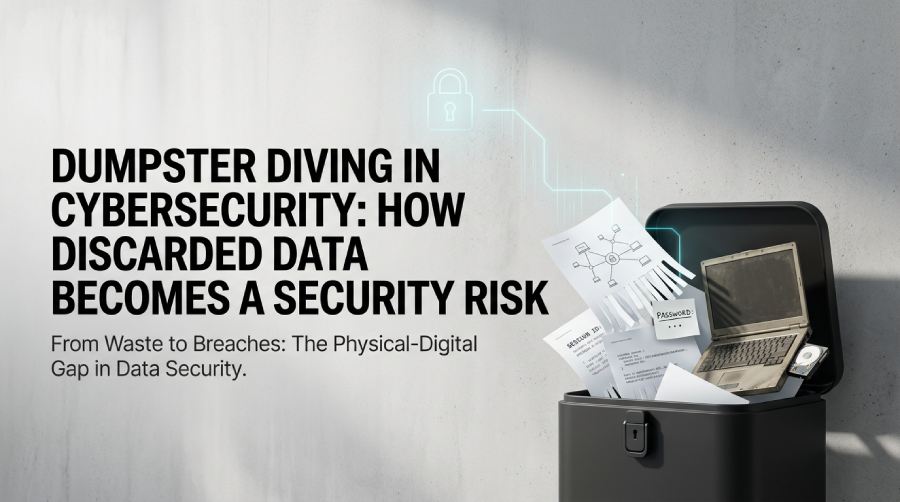
In cybersecurity, the most dangerous security threat is not always hidden in malware, zero-day exploits, or cloud misconfigurations. Sometimes, it is sitting in a trash bin, recycling container, storage closet, or discarded hard drive. Dumpster diving is the practice of searching through physical or digital waste to recover sensitive information that can be used for fraud, intrusion, identity theft, or social engineering.
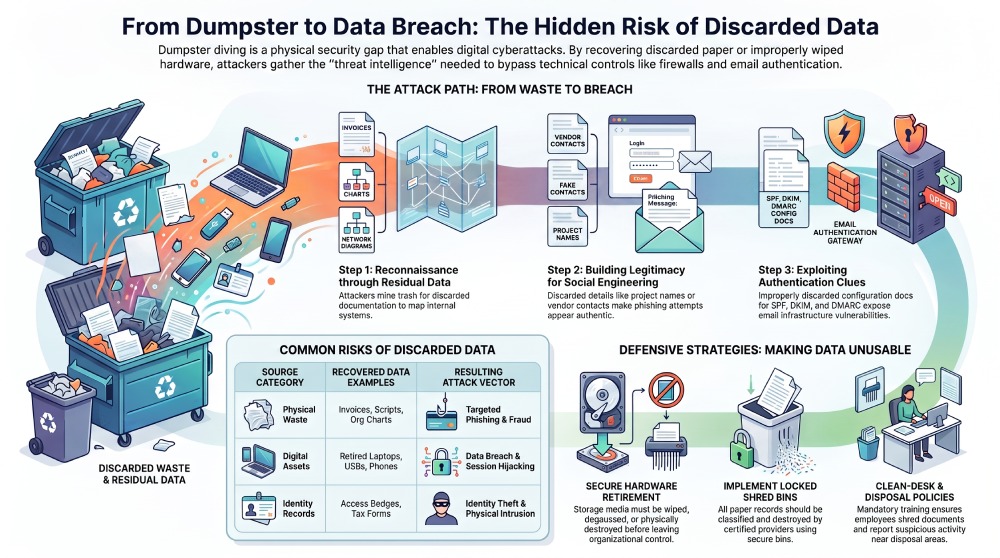
From an information security perspective, dumpster diving exposes the gap between digital controls and physical security. A company may invest in firewalls, endpoint security, and email authentication technologies such as SPF, DKIM, and DMARC, yet still expose confidential information through printed invoices, sticky notes, shipping labels, old access badges, or improperly wiped devices. This makes dumpster diving a practical attack vector for attackers seeking low-cost information that can support phishing, social engineering, fraud, or other cyberattacks.
What Dumpster Diving Means in Cybersecurity
Dumpster diving in cybersecurity refers to the collection of discarded materials that reveal sensitive information about people, systems, vendors, customers, or internal operations. It is both a physical security issue and an information security concern because the recovered data can help attackers bypass technical controls.
Physical Waste as a Cybersecurity Entry Point
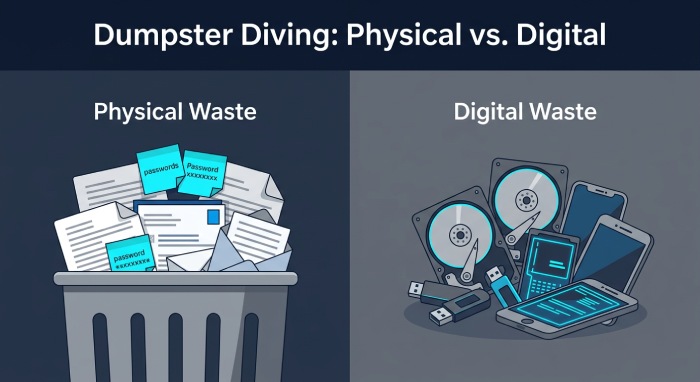
Common sources include paper files, printed emails, meeting notes, network diagrams, password reset forms, call center scripts, HR records, visitor logs, and packaging from IT equipment. Even a discarded business report can reveal internal processes, vendor relationships, customer information, or other details that attackers could use for reconnaissance.
Physical security teams often focus on locks, cameras, and access control, but dumpster diving shows why waste handling must be treated as part of cybersecurity. If sensitive information is thrown away without shredding, secure bins, or documented disposal procedures, it becomes a security threat.
Digital Disposal and Forgotten Data
Dumpster diving is not limited to garbage bags. Old laptops, USB drives, phones, routers, printers, and backup tapes may contain personal information, user sessions, browser security artifacts, security cookies, a session ID, cached credentials, or a unique user ID. Poor disposal of digital assets can expose confidential data and create security vulnerabilities that lead to a data breach.
Why “Deleted” Does Not Always Mean Gone
Files deleted from a device may remain recoverable unless the storage media is securely wiped or destroyed. Inadequate data protection during hardware retirement can expose sensitive information, privacy records, and user identification details long after a system leaves the organization.
Types of Discarded Data Attackers Look For
Attackers engaging in dumpster diving look for information that helps them understand people, technology, processes, and trust relationships. The goal is not always immediate account takeover; often, the goal is threat intelligence gathering before a larger campaign.
Personal, Financial, and Identity Data
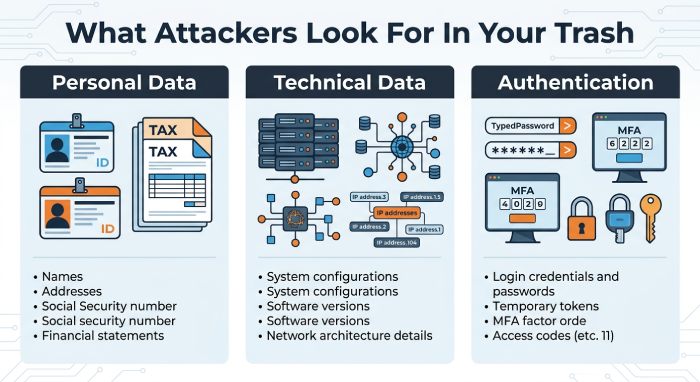
Personal information such as names, addresses, phone numbers, tax records, insurance forms, payroll documents, medical paperwork, or customer contracts can support identity theft. Identity theft becomes easier when attackers combine discarded data with leaked records from another data breach. Even partial sensitive information can be enough to pass verification checks or impersonate an employee.
Technical and Website Data
Discarded technical records may contain IP addresses, VPN details, internal URLs, network diagrams, access control information, or other documentation that reveals how systems and services are connected. If improperly discarded, these details can expose internal infrastructure, security weaknesses, and potential attack paths. Attackers can use this information during reconnaissance to better understand an organisation’s environment and plan targeted phishing, social engineering, or other cyberattacks.
Discarded website and business documentation may also reveal useful information about an organisation’s systems, services, and internal processes. Although individual details may seem harmless, attackers can combine them with other information to identify potential weaknesses and plan targeted phishing or social engineering attacks.
Authentication and Email Security Clues
Attackers may search for password hints, MFA recovery codes, help desk procedures, domain information, or email authentication records. Documents containing SPF, DKIM, or DMARC configuration details can reveal useful information about how an organisation’s email infrastructure is protected. Organisations should therefore ensure that configuration documents, authentication records, reporting data, and other sensitive cybersecurity information are securely stored and properly disposed of rather than casually discarded.
How Dumpster Diving Leads to Data Breaches and Social Engineering
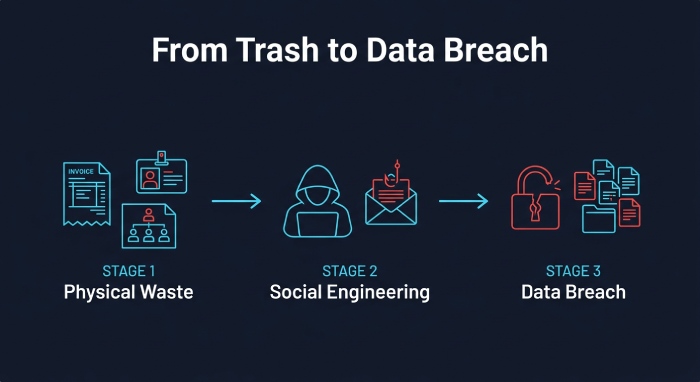 Dumpster diving often works because it supports social engineering. Instead of attacking a network first, attackers collect sensitive information, study business language, and build credibility. This transforms discarded material into usable threat intelligence.
From Waste to Reconnaissance
A single invoice may reveal vendor names. A call script may reveal verification questions. A printed org chart may identify executives. An old support ticket may reveal internal processes or customer-service procedures. This information can help attackers create convincing phishing emails, impersonation attempts, or targeted social engineering campaigns.
When dumpster diving uncovers confidential data, attackers may use it for credential theft, impersonation, fraud, or unauthorised access. If attackers find a session ID, cookie records, or browser security details, they may attempt to hijack user sessions or exploit weaknesses such as cross-site request forgery where website security controls are poor.
Social Engineering With Context
Social engineering succeeds when the attacker sounds legitimate. Discarded sensitive information gives them that legitimacy. They may reference a real project name, a customer issue, an internal department, or a known vendor. This makes employees more likely to disclose credentials, approve payments, or open phishing links.
Turning Small Details Into a Data Breach
A small clue can become a major data breach. For example, a discarded access badge plus a printed floor plan creates a physical security risk. A password reset form plus an employee phone number creates an identity theft risk. A vendor invoice plus a spoofed domain creates a phishing risk. In each case, dumpster diving becomes a security threat because it enables the next stage of compromise.
Real-World Risk Scenarios for Businesses and Individuals
Dumpster diving affects both enterprises and private individuals. The impact ranges from nuisance fraud to major data breach incidents involving customers, employees, and regulated information.
Business Scenario: Vendor Impersonation
A company may accidentally expose sensitive procurement information by discarding printed documents containing supplier contacts, payment schedules, and executive approval details. Attackers can use this information to craft convincing invoice-change emails designed to redirect payments. Strong DMARC enforcement can help protect against unauthorised use of an organisation’s domain, while employee verification procedures can help detect fraudulent invoice-change requests. Together with secure document disposal, these controls reduce the risk of physical information exposure becoming the starting point for a cyberattack.
Individual Scenario: Identity Theft
A person throws away bank statements, medical letters, shipping labels, or tax documents without shredding them. Attackers recover personal information and use it for identity theft, account recovery, or new-account fraud. This is a direct privacy and data protection problem, not merely a household inconvenience. Identity theft often starts with fragments of sensitive information that appear insignificant in isolation.
Digital Scenario: Retired Devices
An organization may retire laptops previously used for analytics, customer support, or marketing activities. These devices can contain exported reports, user preferences, consent records, website activity data, performance metrics, dashboards, and customer-related references. If the information remains on the devices and they are not securely wiped before disposal or reassignment, the hardware could become a source of unauthorized data exposure or a potential data breach.
Prevention Strategies: Secure Disposal, Policies, and Employee Awareness
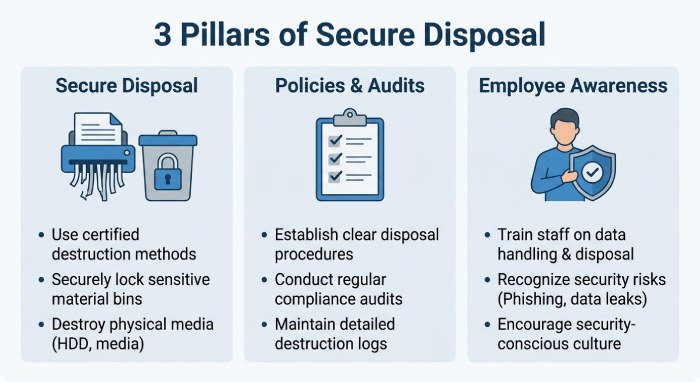
Preventing dumpster diving requires a blend of cybersecurity governance, information security controls, and physical security discipline. The objective is to make discarded data unusable before it leaves organizational control.
Secure Disposal Controls
Organizations should classify sensitive information and confidential data before disposal. Paper records should go into locked shred bins and be destroyed by certified providers. Media should be wiped, degaussed, or physically destroyed according to risk. Devices should be tracked from procurement through retirement, including laptops, mobile phones, printers, storage drives, access cards, and backup media.
Security teams should treat disposal as part of data protection. If a document would be protected while stored in a system, it should also be protected when discarded.
Policies, Audits, and Accountability
Information security policies should define what can be thrown away, what must be shredded, and who approves asset disposal. Audits should include trash-handling procedures, clean-desk compliance, storage rooms, loading docks, and third-party disposal vendors. Physical security teams should coordinate with cybersecurity teams so that waste removal does not become an unmanaged security threat.
Threat intelligence and security teams should also consider the risk of discarded data. Sensitive reports, logs, screenshots, and other security documentation should be securely stored and disposed of when no longer needed. Protecting this information throughout its lifecycle helps prevent attackers from using discarded data for reconnaissance, phishing, social engineering, or other cyberattacks.
Employee Awareness and Practical Training
Employees should understand that dumpster diving is not an outdated tactic. It remains relevant because social engineering attacks rely on believable information. Training should explain how discarded sensitive data can be used to enable phishing, identity theft, impersonation, fraud, and other cyberattacks, while emphasizing the importance of email security practices such as protecting credentials, verifying suspicious messages, and avoiding the exposure of information that attackers could use to create convincing phishing emails.
Awareness programs should teach employees to shred documents, avoid printing unnecessary records, clear desks, protect visitor lists, secure notebooks, and report suspicious behavior near disposal areas. Cybersecurity culture improves when staff see physical security, privacy, browser security, website security, and information security as connected responsibilities rather than separate departments.
General Manager
General Manager of DuoCircle. Product strategy and commercial lead for AutoSPF's 2,000+ customer base.
LinkedIn Profile →