How to Detect and Mitigate a DNS Amplification Attack

Quick Answer
A DNS amplification attack is a DDoS attack that exploits vulnerable DNS servers to overwhelm a target with traffic. Detect it by monitoring unusual DNS query patterns and traffic spikes. Mitigate it using rate limiting, DNS response controls, access restrictions, and anti-spoofing measures.
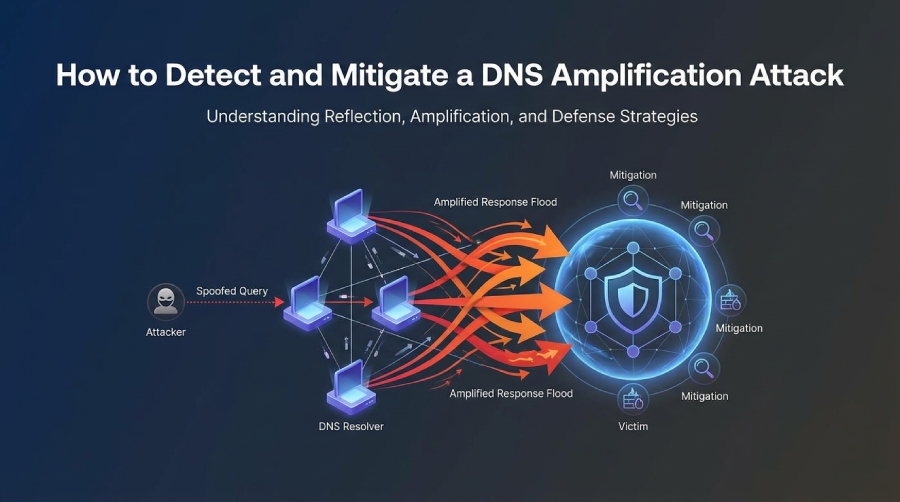
DNS amplification is a type of distributed denial-of-service (DDoS) attack that exploits publicly accessible DNS infrastructure to overwhelm a target with excessive traffic. It combines reflection and amplification techniques, allowing attackers to send small DNS queries with spoofed source IP addresses and trigger larger responses toward the intended victim. While these attacks primarily threaten network availability, DNS reliability also supports essential services such as website access, email delivery, and SPF-based email authentication.
DNS Amplification as Distributed Denial of Service
A distributed denial-of-service attack aims to exhaust network bandwidth, infrastructure capacity, or application resources. When DNS amplification is used, attackers exploit open resolvers to generate large volumes of unsolicited DNS responses, potentially disrupting legitimate network traffic and online services.
The attack becomes particularly effective when multiple compromised devices generate spoofed DNS queries. Each exposed resolver can return a response larger than the original request, creating substantial traffic that can overwhelm network infrastructure, consume bandwidth, and disrupt online services.
Why DNS Is an Attractive Attack Vector
DNS supports essential internet services, including website resolution, application connectivity, and email authentication. However, misconfigured DNS infrastructure can expose organizations to security risks. Open recursive resolvers, inadequate access controls, and insufficient traffic monitoring may allow attackers to exploit DNS services as part of amplification attacks.
Organizations also rely on DNS availability to retrieve SPF records and other email authentication information. DNS disruptions can therefore affect the reliability of email authentication checks.
Business and Operational Risk
For enterprises, DNS-related attacks can create operational and financial consequences. Service interruptions may affect customer access, business communications, and applications that depend on DNS resolution. If DNS services become unavailable, receiving mail servers may also experience difficulties retrieving SPF records, potentially causing temporary email authentication errors. Maintaining reliable DNS infrastructure is therefore important for both network availability and email security.
How DNS Availability Affects SPF Email Authentication
DNS availability plays an important role in email authentication because SPF (Sender Policy Framework) relies on DNS TXT records to identify authorized mail servers for a domain.
When a receiving mail server evaluates an SPF policy, it retrieves the domain’s SPF record and may perform additional DNS lookups through mechanisms such as include, a, and mx.
If DNS infrastructure experiences outages, timeouts, or resolution failures, receiving mail servers may encounter temporary errors while retrieving SPF records. Depending on the receiving server’s handling of these errors, SPF evaluation may return a temporary error (temperror), potentially affecting email authentication and message delivery.
Organizations should monitor DNS availability, regularly validate SPF records, and review their DNS lookup consumption. Under RFC 7208, SPF evaluations are limited to 10 DNS-querying terms, making efficient SPF configuration important for reliable email authentication.
How DNS Amplification Works: Spoofing, Open Resolvers, and Large Responses
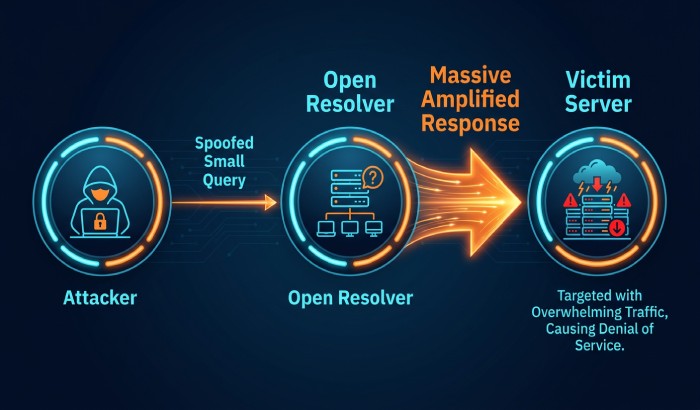
A dns amplification attack follows a predictable amplification process: spoof the victim, query exposed resolvers, and reflect oversized responses at the target.
Step 1: IP Spoofing and the Spoofed IP Address
The attacker sends a DNS query using a forged source IP address that belongs to the intended victim. Because traditional UDP-based DNS communication does not establish a connection before sending a response, an exposed resolver may direct its reply to the spoofed address instead of the actual requester.
Spoofing in a Reflection Attack
This is what makes the event a reflection attack. The attacker does not send all traffic directly to the victim. Instead, the attacker manipulates third-party systems into sending replies to the Victims IP. This distributed reflection attack hides the real origin of the malicious traffic and increases the difficulty of attribution.
Why UDP Packets Matter
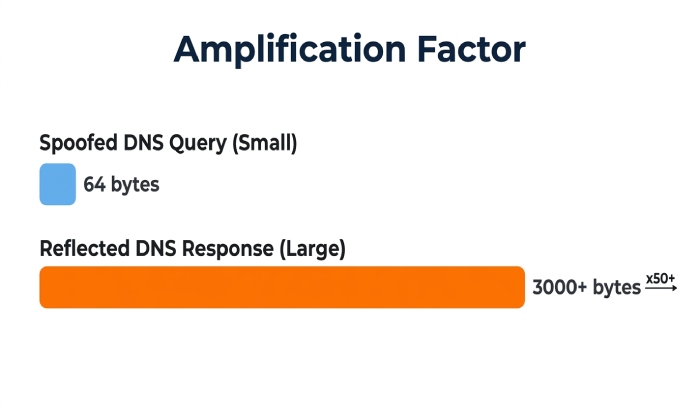
Each forged udp packet can be small, but the reflected answer can be large. The difference between request size and response size determines the amplification factor. A modest udp packet may trigger a large response, creating significant response amplification.
Step 2: Abuse of Open DNS Resolvers
An open DNS resolver accepts recursive queries from clients across the internet without appropriate access restrictions. Attackers can exploit these systems as reflectors by sending queries with spoofed source addresses. Restricting recursive access to trusted networks helps prevent DNS infrastructure from being abused in amplification attacks.
Recursive Query Abuse
A recursive DNS query asks a resolver to retrieve the requested DNS information on behalf of a client. Under normal conditions, recursive resolvers help users resolve domain names and access online services. During an amplification attack, attackers exploit publicly accessible resolvers by sending queries with spoofed source IP addresses, causing the resulting responses to reach the intended victim.
DNS Configuration Weaknesses
Poor DNS configuration and permissive resolver settings increase security exposure. Allowing unrestricted recursive queries from the public internet or operating an unmonitored DNS resolver can turn legitimate DNS infrastructure into a reflector for an amplification attack. Unauthorized zone transfers are a separate DNS security risk and should be controlled through appropriate access restrictions.
Step 3: Botnet-Driven Traffic Flood
Attackers may use multiple compromised devices to generate spoofed DNS queries across numerous open resolvers. Each resolver sends its response toward the victim, creating a distributed traffic flood. The combined response volume can overwhelm network capacity and interrupt legitimate services.
DNS amplification attacks can be difficult to mitigate through basic source-IP blocking because the reflected traffic may originate from legitimate DNS resolvers distributed across different networks. Security teams must distinguish malicious response patterns from normal DNS activity before applying filtering rules.
Common Targets, Attack Patterns, and Business Impact
Who Gets Targeted
Common targets include financial institutions, gaming platforms, SaaS companies, ecommerce sites, government portals, and managed hosting environments. Any organization with valuable online availability can become the target of a distributed attack.
Organizations may rely on specialized DDoS protection providers or upstream network operators to identify and filter malicious traffic. Smaller businesses should also establish incident response procedures with their hosting providers and internet service providers before an attack occurs.
Impact on Network Infrastructure
A volumetric attack attempts to consume available bandwidth and overwhelm network infrastructure. Even when application servers remain operational, saturated network links, overloaded edge devices, and upstream congestion can prevent legitimate users from accessing online services.
Typical Attack Patterns
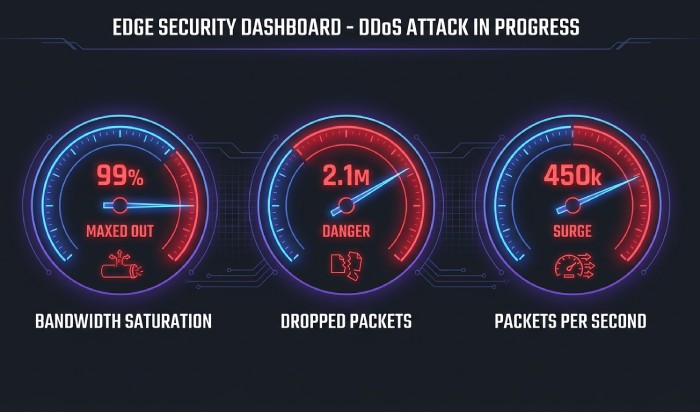
A DNS amplification attack may produce a sudden increase in inbound DNS response traffic. The targeted organization may receive unusually large volumes of UDP packets from multiple unrelated resolvers, often without corresponding requests from its own network.
Distributed Reflection Attack Behavior
In a distributed reflection attack, incoming traffic may originate from DNS resolvers across different autonomous systems, cloud networks, and internet service providers. Because some sources may be legitimate DNS infrastructure, indiscriminate IP blocking can affect normal DNS operations. Traffic analysis and targeted filtering are important for distinguishing malicious responses from legitimate activity.
When Blackhole Routing Appears
When an attack threatens upstream network capacity, an internet service provider may recommend blackhole routing as an emergency mitigation measure. This approach discards traffic destined for the affected IP address or network prefix, helping protect other network resources. However, it also makes the targeted destination unreachable, so it should be used carefully and in coordination with the.
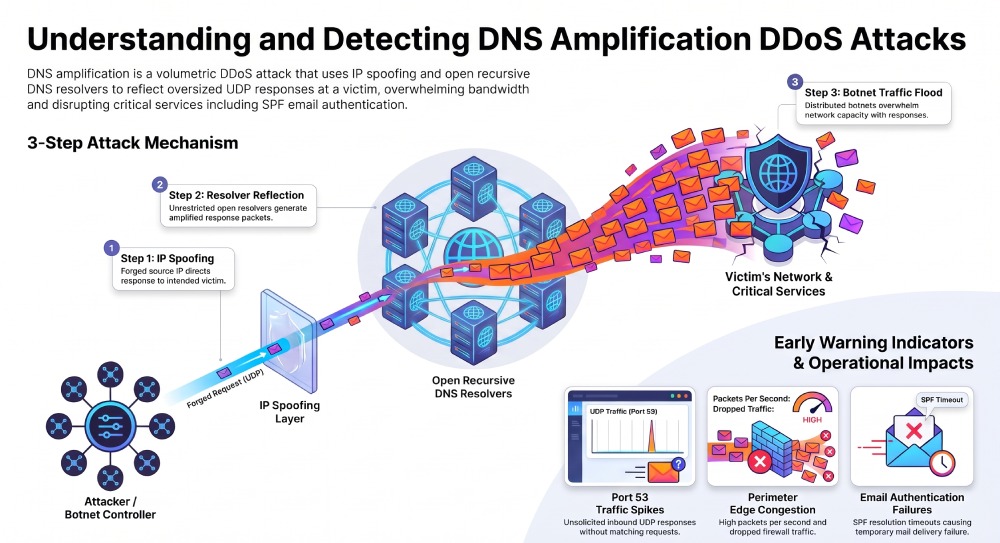
Early Warning Signs of a DNS Amplification Attack
Sudden Spikes in UDP and DNS Traffic
One potential indicator of a DNS amplification attack is an unusual increase in inbound UDP traffic originating from source port 53. Security teams should investigate unexpected DNS response volumes, deviations from normal traffic baselines, and responses that cannot be associated with legitimate outbound queries.
Signs in Edge and Firewall Telemetry
A Firewall, router, or Load Balancer may show:
- Large volumes of inbound UDP/53 traffic
- DNS responses without matching outbound requests
- A sudden rise in packets per second
- Increased dropped packets at the perimeter
- High utilization on links between Data Centers and upstream carriers
These are classic symptoms of a volumetric attack and should be treated as potential distributed denial of service activity.
Resolver and Application Symptoms
A secondary signal is degradation in dependent services. Users may report failed logins, slow page loads, API timeouts, or complete online service disruption. Internally, monitoring may show overloaded edge devices, saturated transit links, or unstable load balancing behavior.
General Manager
General Manager of DuoCircle. Product strategy and commercial lead for AutoSPF's 2,000+ customer base.
LinkedIn Profile →