

You might create the most engaging email, but it still fails to land in the recipient’s inbox. If this keeps happening frequently, the problem may not be with your email campaigns but with how receiving servers perceive your emails.
If the recipient’s servers cannot trust an incoming email, they either send it to the spam folder or block it altogether. This subsequently impacts your sender reputation and creates a cycle where even your legitimate emails start facing delivery issues over time.

To ensure that your emails reach their intended recipients’ inboxes, it is important to take a step back and understand why sender reputation matters so much to receiving servers, how you can track it, and the practical steps you can take to monitor and improve it.
What is sender reputation, and why does it matter?
Your email sender reputation is like a trust profile that receiving servers maintain for your sending domain and IP address. It’s not like a document per se, but an ongoing assessment built from your sending behavior over time. It evaluates how frequently you send emails, whether your messages are properly authenticated, how recipients respond to them, and how often they trigger complaints or bounces.

All of this matters because the receiving servers primarily rely on this assessment to decide what to do with your incoming emails, whether to simply let them in or route them to spam, or reject them altogether if they raise any doubts about the sender’s identity. This only works in your favour when your sending patterns are consistent, your emails are properly authenticated, and your recipients actively engage with your messages. If these aspects are not in order, even your legitimate emails can start facing delivery issues, making sender reputation a critical factor in long-term email deliverability.
How to check your sender reputation?
When it comes to keeping track of your sender reputation, guesswork doesn’t work. You need tangible metrics that give you visibility into how mailbox providers perceive your domain and IP address. Since your email sender reputation is contingent on how the receiving servers perceive your emails, the best way to evaluate your sender reputation is by using tools and signals that reflect their point of view rather than your campaign metrics alone.
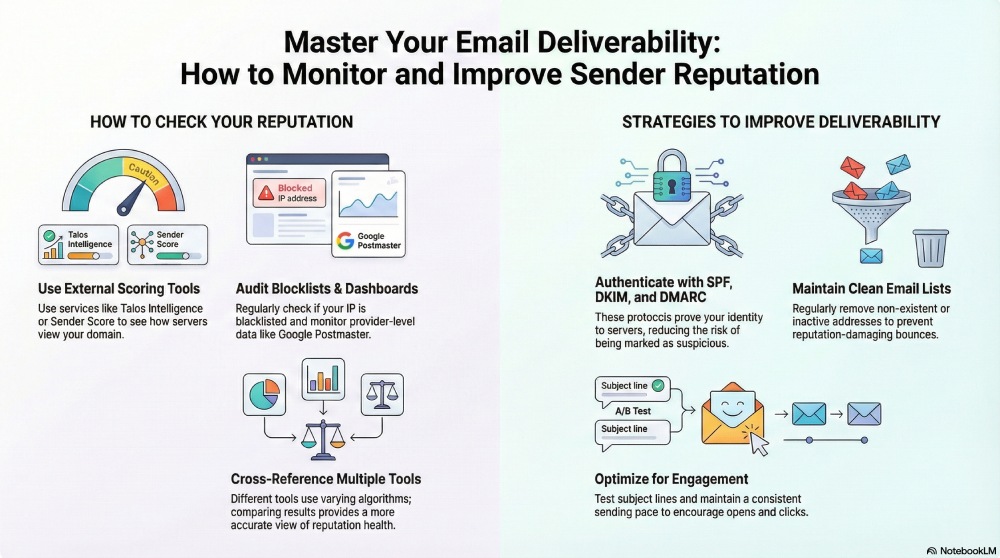
Here’s how you can check your sender reputation:
Use reputation scoring tools
The most reliable way to evaluate your sender reputation is to use external tools that show how receiving servers view your domain and IP. These tools analyse historical sending behaviour, complaint rates, and spam signals to indicate whether your emails are considered trustworthy.
Services such as Talos Intelligence and Sender Score provide clear indicators of your reputation health, helping you identify early warning signs before they impact inbox delivery.
Check blocklists and blacklists
If your domain or IP is listed on spam or blocklists, your emails are far more likely to be sent to spam or blocked completely. Many email providers use these lists to stop unwanted or suspicious emails.
So, it is recommended that you keep a tab on common blocklists and regularly check whether your sending sources are listed on them. If you identify and resolve such blacklisting issues early on, you can easily prevent sudden delivery problems and protect your sender reputation.
Monitor with provider-level dashboards
Most email service providers (ESPs) often give you direct insights into how your emails are being received by them. If you send bulk emails regularly, tools like Google Postmaster provide data on domain and IP reputation, spam rates, authentication performance, and Gmail-specific delivery errors specific to Gmail. Other ESPs, like Microsoft, also have similar dashboards where you can check your sender reputation.
Don’t stick to just one tool
If you want a comprehensive analysis of your sender reputation, you should not stick to a single tool. Each reputation checker uses different data, algorithms, and signal sources, so running a few of them and comparing results gives a more accurate view of your sender reputation health.

How can you improve your sender reputation?
Improving your sender reputation is essentially about building trust with receiving servers and showing them consistently that you prioritize recipients’ safety and that your sending behaviour is responsible.
Here’s how you can achieve this:
Authenticate your domain
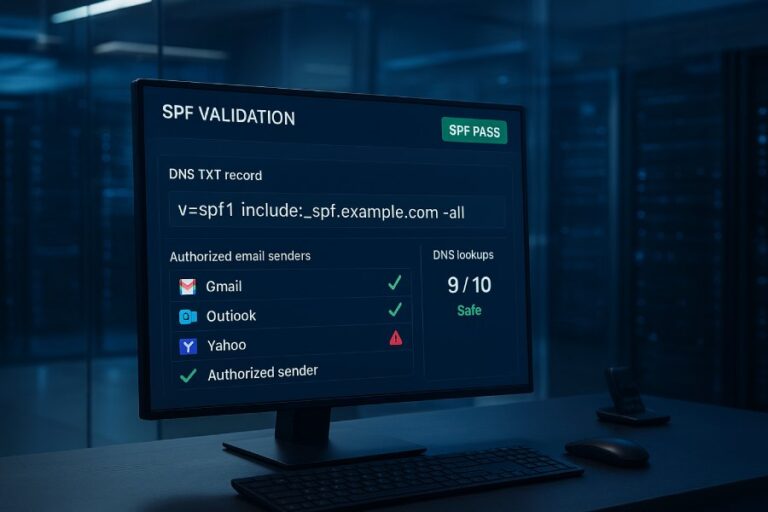
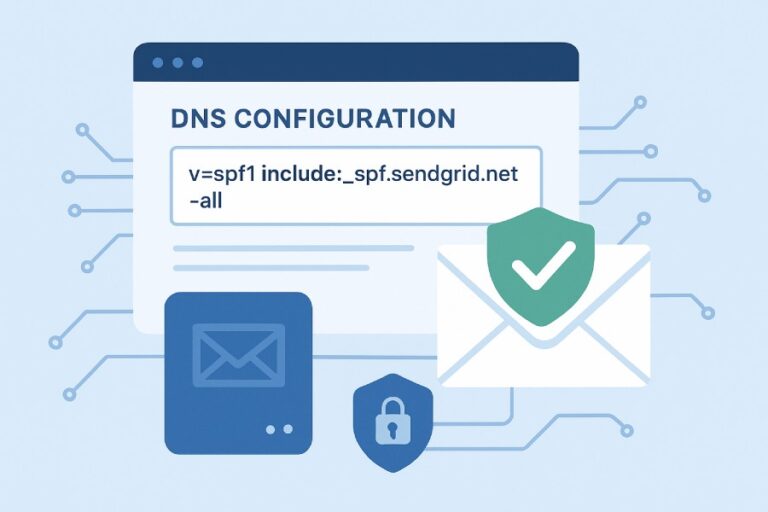
Authenticating your domain with major authentication protocols such as SPF, DKIM, and DMARC is now a non-negotiable requirement for building rapport with receiving servers. With proper email authentication, you can assure them that your emails are genuinely coming from your domain and not from an impersonator. But if you skip this step or rush through it, your emails are more likely to be treated as suspicious, which ultimately pushes them to the spam folder or blocks them altogether.

Clean your lists regularly
Even if your email list is well managed, it won’t stay perfect forever. Some email addresses, especially work emails, stop working when people change jobs or leave a company. If you keep sending emails to these addresses, they bounce back, which hurts your sender reputation.
That’s why it is important to regularly review your sending lists, remove any email addresses that no longer exist, or engage with your messages.
Work on improving engagement
Sometimes, the problem is not where you send the emails, but when and how you send them. If recipients regularly ignore your emails, email providers learn this behaviour and become less likely to place your future messages in the inbox.
In such cases, all it takes is small but important changes like testing subject lines, sending emails at a consistent pace, and keeping the content clear and relevant. These changes might seem minor at first, but over time, they dramatically influence how recipients open, click, or reply to your emails.

Strengthen your sender reputation and c by implementing DMARC, SPF, and DKIM to authenticate messages and reduce spoofing and spam risks.
If you are constantly struggling to maintain a good deliverability rate for your email sending domain, only for your efforts to go in vain, it’s a sign to change your approach. Get in touch with us to know how!