5 Common DNS Vulnerabilities Affecting Email Authentication

Quick Answer
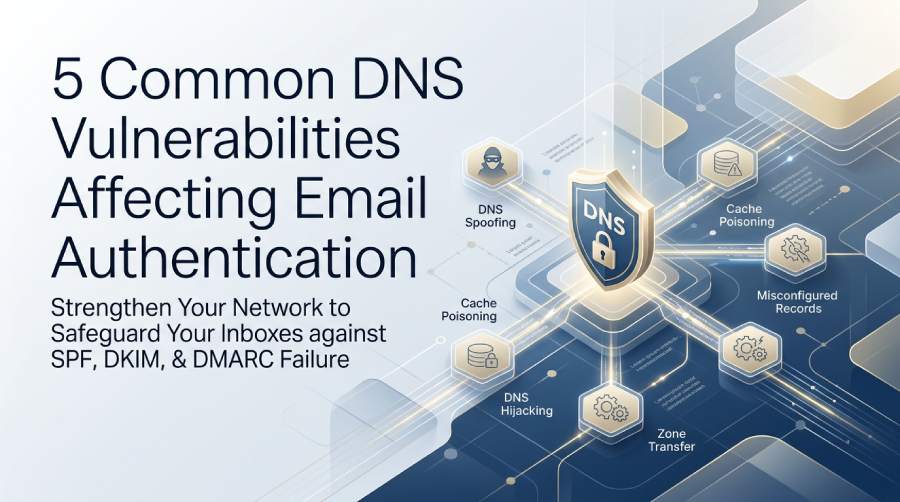
DNS vulnerabilities can weaken email authentication by affecting SPF, DKIM, and DMARC records. Common risks include spoofing, cache poisoning, DNS hijacking, misconfiguration, zone transfer exposure, and missing DNSSEC, increasing phishing, spoofing, and email security risks.
Why DNS Integrity Matters for Email Authentication
SPF, DKIM, and DMARC rely on DNS to publish and retrieve authentication records. When a receiving mail server checks whether a sender is authorized, verifies a DKIM signature, or determines how to handle a DMARC failure, it relies on DNS information. As a result, DNS vulnerabilities can weaken email authentication and increase the risk of phishing, spoofing, and other email-based attacks.
DNS security is an important part of the email authentication attack surface. If an attacker compromises or manipulates DNS information used by SPF, DKIM, or DMARC, the resulting false or altered records can weaken authentication controls. Unlike endpoint-based attacks, some DNS attacks target the infrastructure that email systems rely on to make authentication decisions.
DNS as a Control Plane for SPF, DKIM, and DMARC
Email authentication records are published as DNS TXT records. SPF defines authorized sending infrastructure, DKIM exposes public keys used to verify cryptographic signatures, and DMARC tells receivers what to do when SPF or DKIM alignment fails.
Because SPF, DKIM, and DMARC records are publicly published and regularly queried, DNS vulnerabilities can potentially affect email authentication across an organization’s domains. An unauthorized or incorrect DNS change may weaken authentication controls, increase spoofing and phishing risks, and potentially affect domain reputation and email deliverability.
How Security Teams Detect DNS-Based Email Abuse
Effective DNS security requires more than periodic configuration checks. Organizations should monitor DNS changes, resolver activity, and SPF, DKIM, and DMARC authentication results to identify unexpected changes or authentication failures. Regular validation can help detect configuration issues before they affect email delivery or domain security.
DNS Spoofing and Cache Poisoning: How Fake DNS Responses Undermine SPF, DKIM, and DMARC Checks
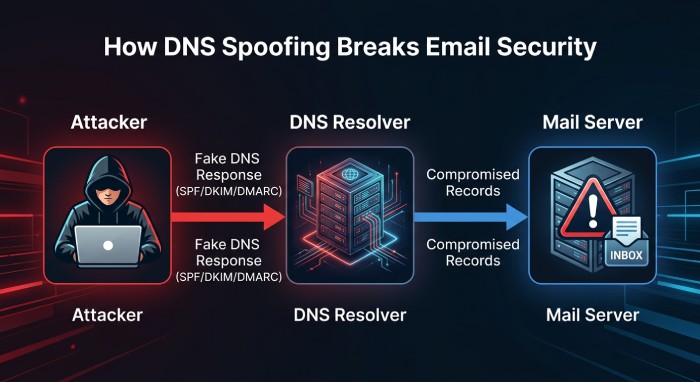 DNS spoofing occurs when an attacker tricks a resolver or client into accepting a forged DNS response. Cache poisoning is a related technique in which false records are inserted into a DNS resolver’s cache. Together,
 dnsspoofing and dns poisoning can cause mail systems to retrieve fraudulent SPF, DKIM, or DMARC records.
How dnsspoofing Breaks Email Authentication
In a dnsspoofing scenario, a receiving mail server may ask for a domain’s SPF record and receive a fake response that authorizes an attacker-controlled mail server. Similarly, forged DKIM DNS responses could provide a malicious public key, allowing fraudulent messages to appear valid. If a fake DMARC record weakens the policy from p=reject to p=none, recipients may accept messages that should have been blocked.
This type of dns attack is especially problematic because the receiving system may behave exactly as designed. It trusts the resolver’s response. Without stronger dns security controls, dns threats like dnsspoofing can undermine years of investment in email authentication.
Monitoring Signals for DNS Spoofing and Cache Poisoning
Organizations can monitor DNS responses and authentication results for unexpected changes. Comparing DNS records across trusted resolvers and regularly validating SPF, DKIM, and DMARC records can help identify potential DNS-related authentication problems.
Practical Defensive Measures
Use trusted recursive resolvers, enable DNSSEC validation where possible, monitor DNS answer consistency from multiple locations, and configure security alerts for suspicious changes to SPF, DKIM, and DMARC lookups. Automated response procedures should document escalation paths, compliance evidence, and remediation steps.
DNS Hijacking: When Attackers Redirect or Alter Email Authentication Records
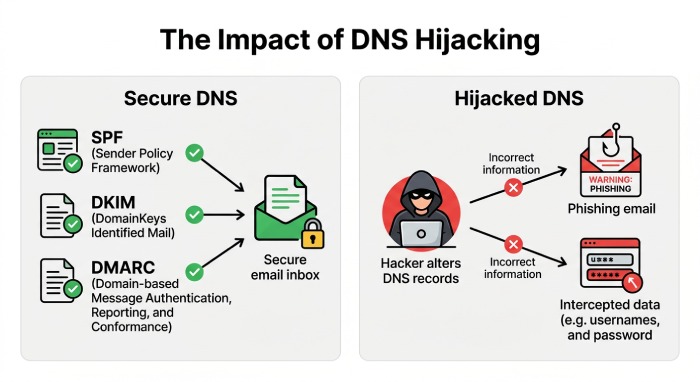
DNS hijacking happens when attackers gain control of a domain’s DNS settings, registrar account, authoritative name server, or DNS management console. Unlike dnsspoofing, which often manipulates responses in transit or cache, dns hijacking changes the source of truth.
Why Hijacked DNS Is So Damaging
If attackers modify SPF, DKIM, or DMARC records, they can authorize malicious senders, replace DKIM keys, or weaken enforcement policies. They may also redirect MX records to intercept email or support credential-harvesting campaigns. These dns vulnerabilities create both immediate fraud exposure and long-term domain reputation damage.
DNS hijacking may result from stolen registrar credentials, weak MFA, compromised API keys, malicious insiders, or poor change control. Because these dns risks often involve legitimate administrative interfaces, traditional network protection may not detect them immediately.
Detection and Response Considerations
Organizations should monitor DNS provider and registrar activity for unexpected changes to SPF, DKIM, DMARC, and MX records. Reviewing DNS change logs alongside mail authentication results can help identify unauthorized modifications, configuration errors, and potential email security issues. Regular validation of DNS records also helps ensure that authentication settings remain accurate and aligned with the organization’s sending infrastructure.
DNS changes that affect SPF, DKIM, or DMARC should be monitored and validated through appropriate change-management and auditing processes. Keeping records of DNS changes can help security teams identify unauthorized modifications, investigate authentication failures, and maintain a reliable history for security and compliance purposes.
Misconfigured DNS Records: SPF, DKIM, and DMARC Errors That Create Authentication Gaps
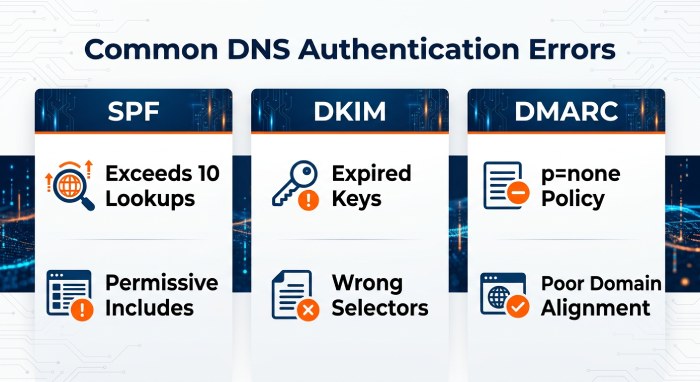
Not every dns attack requires an active adversary. Many dns vulnerabilities come from misconfigured records: overly permissive SPF includes, missing DKIM selectors, weak DMARC policies, duplicate TXT records, or syntax errors.
Common SPF, DKIM, and DMARC Mistakes
SPF records may exceed the 10-lookup limit, causing permanent errors. DKIM keys may be too short, expired, or published under the wrong selector. DMARC records may use p=none indefinitely, fail to align with organizational domains, or send reports to unmanaged mailboxes.
Tools such as AutoSPF can help organizations manage SPF complexity, especially when many SaaS platforms send mail on behalf of the business.
Why Misconfiguration Increases DNS Risks
Attackers actively search for domains with weak or broken authentication. A permissive SPF record can authorize too many hosts. A missing DMARC reject policy can allow spoofed messages to reach inboxes. These dns risks may not look like an obvious dns attack, but they produce similar outcomes: reduced trust, increased phishing success, and weaker compliance posture.
Security monitoring should include recurring validation of authentication records, vulnerability scan findings, and mail authentication failure trends. Security dashboards can highlight domains with declining DMARC pass rates, while automated workflows can assign remediation tasks to DNS owners.
Zone Transfer and DNS Enumeration Exposure: How Leaked DNS Data Helps Email Attackers
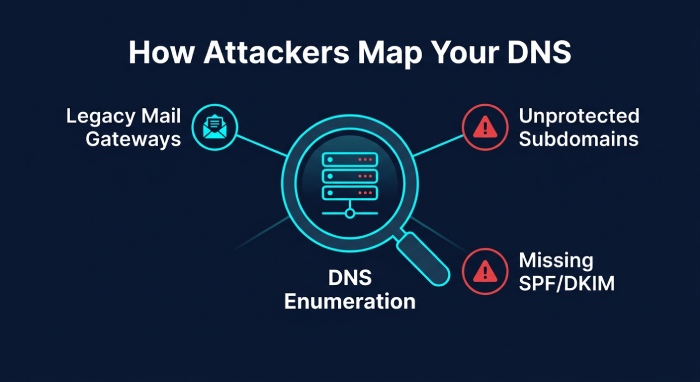 DNS zone transfers are designed to replicate DNS data between authoritative servers. If misconfigured, they may expose the full contents of a zone to unauthorized parties. Attackers also use DNS enumeration to map subdomains, mail infrastructure, SPF dependencies, and forgotten services.
How Enumeration Supports Email Attacks
Leaked DNS data can reveal legacy mail gateways, staging domains, third-party senders, and unused subdomains that lack SPF, DKIM, or DMARC enforcement. Attackers can use this intelligence to craft targeted phishing campaigns or identify weaker paths into the organization.
DNS enumeration can also reveal email-related infrastructure, including mail servers, third-party sending services, subdomains, and DNS records that support SPF, DKIM, and DMARC. This information may help attackers identify outdated systems, forgotten domains, or authentication gaps that could be targeted in phishing or spoofing campaigns.
Monitoring DNS Activity for Email Security
Organizations should monitor DNS changes, authentication results, and mail delivery patterns for unexpected changes. Reviewing SPF, DKIM, and DMARC records regularly can help identify unauthorized modifications, configuration errors, and authentication failures before they create larger email security or deliverability issues.
Lack of DNSSEC: Why Unsigned DNS Leaves Email Authentication Records Vulnerable
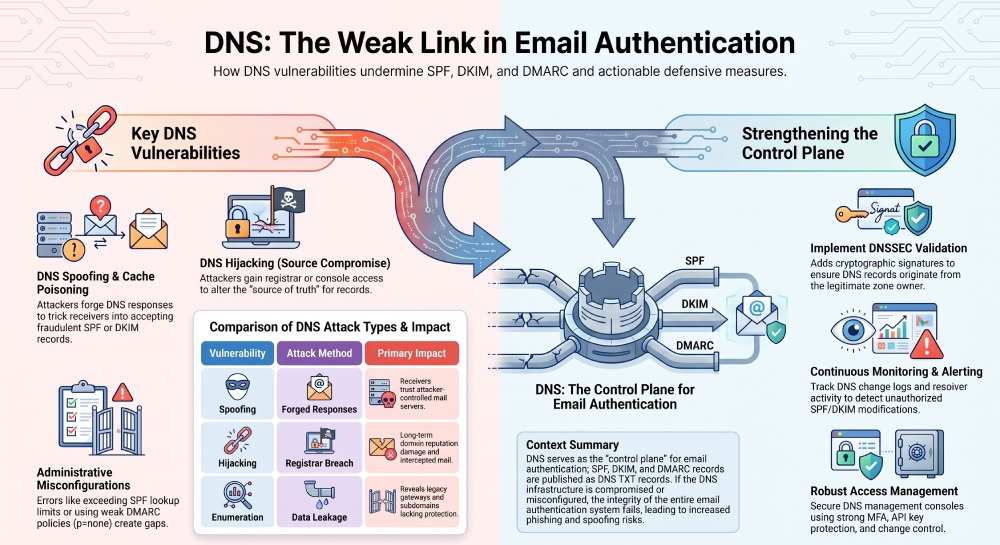 DNSSEC adds cryptographic validation to DNS responses, helping resolvers verify that records came from the legitimate zone owner and were not altered. Without DNSSEC, SPF, DKIM, and DMARC records remain more exposed to dnsspoofing, dns poisoning, and other dns vulnerabilities.
Why DNSSEC Strengthens Email Authentication Trust
DNSSEC does not encrypt DNS traffic and does not replace SPF, DKIM, or DMARC. Instead, it improves dns security by making forged DNS answers easier to detect. For email authentication, this matters because the receiving server’s decision depends on record integrity.
Unsigned zones increase dns risks because attackers have more room to manipulate responses through resolver compromise, cache poisoning, or on-path interference. In contrast, DNSSEC validation can reduce the success rate of certain dns attack techniques and improve confidence in authentication results.
Operational Challenges and Monitoring Requirements
DNSSEC must be configured and maintained carefully. Expired signatures, broken chains of trust, or incorrect key rollovers can cause DNS resolution failures and potentially affect services that depend on DNS. Organizations should monitor DNSSEC validation results and authentication failures, and review DNS changes regularly. If DNSSEC problems coincide with email authentication or delivery issues, teams should investigate whether DNS configuration is contributing to the problem.
General Manager
General Manager of DuoCircle. Product strategy and commercial lead for AutoSPF's 2,000+ customer base.
LinkedIn Profile →