What Is TLS-RPT and Why Does It Matter for Email Security?

Quick Answer
TLS-RPT (Transport Layer Security Reporting) is an email security protocol that sends reports about TLS encryption failures. It helps domain owners detect delivery issues, monitor secure email connections, and improve protection against email interception and security threats.
Email remains one of the most widely used communication channels for businesses, making secure email delivery a critical concern. While technologies such as SPF, DKIM, and DMARC help verify sender authenticity, organizations also need protection for the transmission process itself. Consolidate your includes with an SPF flattening service to stay under the 10-lookup limit. This is where TLS-RPT plays an important role.
Understanding TLS-RPT
TLS-RPT, short for Transport Layer Security Reporting, is an email security standard designed to provide visibility into encryption-related issues that occur during email transmission. It enables domain owners to receive reports when problems arise with Transport Layer Security (TLS) connections between mail servers.
The protocol was introduced to help organizations identify situations where encrypted email delivery fails or where security policies cannot be enforced as expected. By collecting and analyzing these reports, administrators can gain insight into delivery issues that might otherwise remain unnoticed.
Why Secure Email Transport Matters
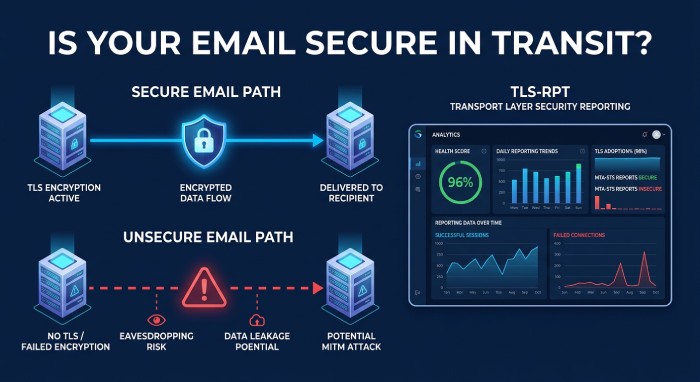
When email servers communicate, they often use TLS encryption to protect messages while they travel across the internet. If encryption fails or is downgraded, sensitive information may be exposed to interception or delivery failures.
Without proper monitoring, organizations may never know that messages are encountering encryption problems. TLS-RPT addresses this challenge by providing detailed reporting on the health of TLS-secured email delivery.
How TLS-RPT Works
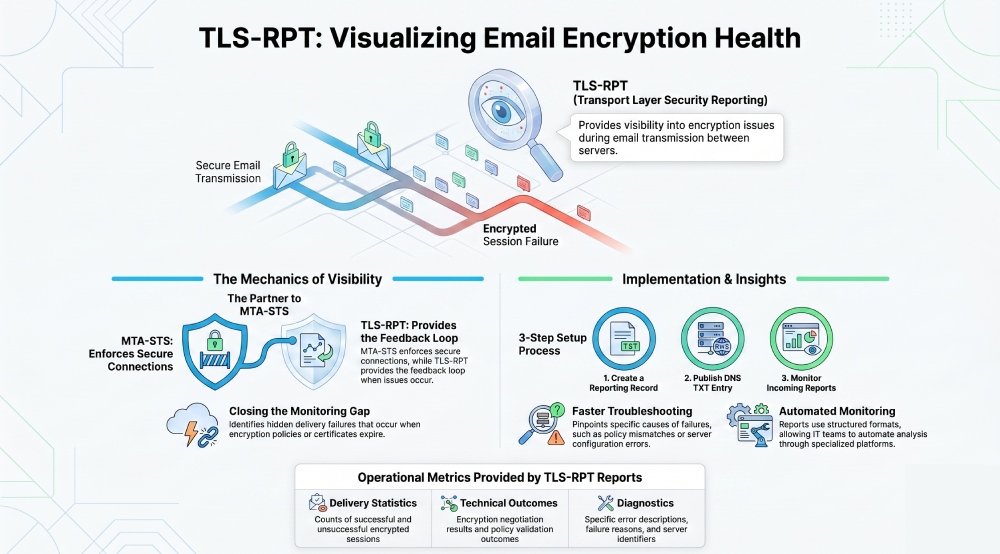
TLS-RPT functions by allowing receiving domains to publish a DNS record that specifies where TLS reports should be sent. Email providers and sending mail systems can then generate periodic reports containing information about TLS connection outcomes.
These reports typically include:
- Details about TLS negotiation failures
- Information related to email transport security policies
- Counts of successful and unsuccessful encrypted sessions
- Data about sending and receiving mail systems
- Potential reasons for delivery problems
The reports are generally delivered in a structured format, making them suitable for automated analysis and monitoring tools.
The Relationship Between TLS-RPT and MTA-STS
TLS-RPT is frequently deployed alongside MTA-STS (Mail Transfer Agent Strict Transport Security).
MTA-STS allows domain owners to publish policies that require secure TLS connections for incoming email. If a sending server cannot establish a compliant encrypted connection, the message may be delayed or rejected according to the policy.
While MTA-STS helps enforce secure delivery, TLS-RPT provides feedback on what happens when issues occur. Together, they create a more complete framework for monitoring and improving email transport security.
Key Benefits of TLS-RPT
Improved Visibility
TLS-RPT provides organizations with a clearer understanding of how email is being delivered across their infrastructure. Security and IT teams can quickly identify patterns of failed encrypted connections.
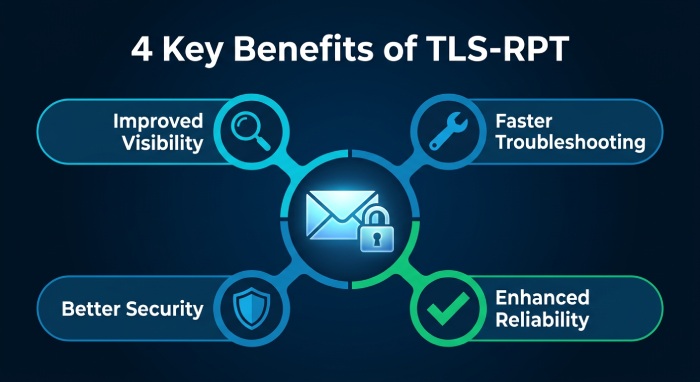
Faster Troubleshooting
Reports help pinpoint the underlying causes of TLS-related delivery issues. This allows administrators to resolve configuration errors, certificate problems, or policy mismatches more efficiently.
Better Security Monitoring
Organizations can detect situations where encrypted delivery is not functioning as intended. This added visibility strengthens overall email security posture.
Enhanced Reliability
By identifying and resolving transport-layer issues, businesses can improve email deliverability and reduce the likelihood of communication disruptions.
Information Found in TLS Reports
TLS-RPT reports can provide valuable operational data, including:
- Delivery success and failure statistics
- Policy validation outcomes
- Encryption negotiation results
- Mail server identifiers
- Error descriptions and failure reasons
- Reporting time periods
Reviewing these metrics regularly helps organizations maintain a secure and dependable email environment.
Setting Up TLS-RPT
Implementing TLS-RPT generally involves three main steps:
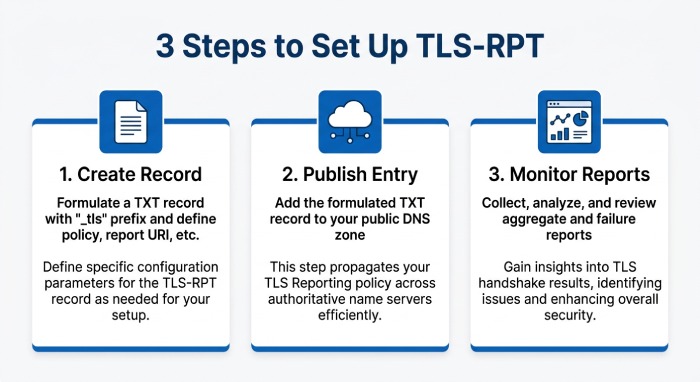
- 1. Create a Reporting Record: Generate a TLS-RPT DNS record that specifies where reports should be delivered.
- 2. Publish the DNS Entry: Add the appropriate TXT record to your domain’s DNS configuration according to the TLS-RPT specification.
- 3. Monitor Incoming Reports: Collect and analyze the reports to identify delivery failures, policy issues, and TLS-related errors.
Many organizations choose specialized monitoring platforms to simplify report processing and visualization.
Best Practices for TLS-RPT Deployment
To maximize the value of TLS-RPT:
- Deploy it alongside MTA-STS whenever possible
- Review reports regularly
- Investigate recurring TLS failures promptly
- Verify certificate validity and server configurations
- Automate report analysis for larger environments
These practices help ensure that email encryption policies are functioning correctly and that delivery issues are addressed quickly.
Conclusion
TLS-RPT is an important email security standard that helps organizations monitor the effectiveness of encrypted email delivery. By providing actionable reports on TLS connection failures and policy enforcement issues, it enables administrators to identify problems early and strengthen their email infrastructure. When combined with MTA-STS, TLS-RPT offers greater visibility, improved security, and enhanced confidence in the integrity of email communications.
General Manager
Founder and General Manager of DuoCircle. Product strategy and commercial lead for AutoSPF's 2,000+ customer base.
LinkedIn Profile →