How should you implement DMARC as an MSP or an enterprise?
Quick Answer
Most guides treat DMARC deployment as a two-step process: publishing the DNS record and monitoring its performance. But this is only the starting point and not a complete implementation. In fact, for enterprises and MSPs, DMARC implementation cannot be seen as a one-and-done task.
How should you implement DMARC as an MSP or an enterprise?
Related: Free DKIM Lookup ·Free DMARC Checker ·How to Create an SPF Record

Try Our Free DMARC Checker
Validate your DMARC policy, check alignment settings, and verify reporting configuration.
Check DMARC Record →Most guides treat DMARC deployment as a two-step process: publishing the DNS record and monitoring its performance. But this is only the starting point and not a complete implementation. In fact, for enterprises and MSPs, DMARC implementation cannot be seen as a one-and-done task.
DMARC (RFC 7489) ties SPF and DKIM together by requiring alignment between the envelope sender and the visible From header. According to Google’s February 2024 bulk sender requirements, a DMARC policy of at least p=none is now mandatory for any domain sending 5,000+ messages per day to Gmail users.
As a large enterprise, you rarely send emails from a single domain or particular system. There are internal mail servers, marketing tools, customer support platforms, cloud applications, and multiple third-party vendors that send emails on your behalf. Each of these systems must be properly authenticated for your legitimate emails to get through and reach their recipients.
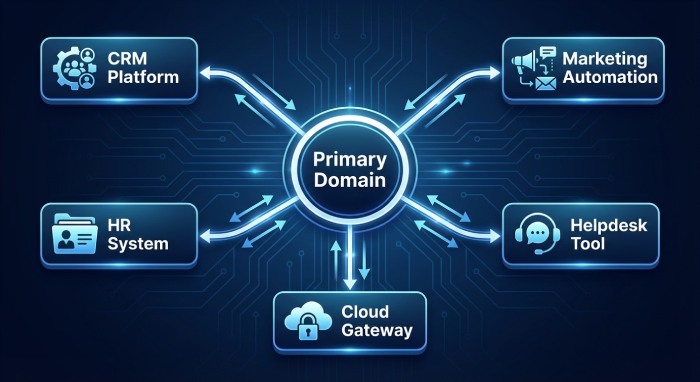
This complex setup inevitably introduces operational challenges that are often overlooked in most DMARC guides and can ultimately create problems for security and IT teams.
That is why DMARC needs to be handled as an ongoing process, especially for MSPs handling multiple clients and for enterprises managing large, distributed email ecosystems.
In this article, we will dig deeper to understand what it really takes to implement DMARC in real-world environments.
Why does DMARC fail after implementation in most cases?
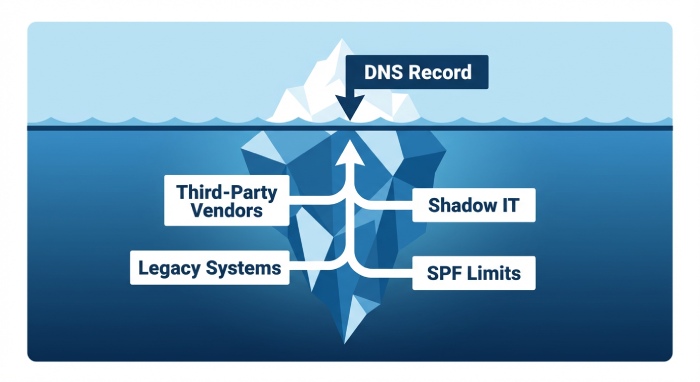
DMARC itself is not very difficult to set up. All it requires you to do is add a record to DNS and turn on reporting until you move beyond initial setup. Real challenges show up when you get into day-to-day email operations.
When you implement DMARC, you are no longer just managing a DNS record. You are managing everything that sends emails using your domain. In large organizations, this quickly becomes difficult because email systems are spread across teams, tools, and vendors.
There might be some systems that were set up years ago, but were then forgotten or no longer have a particular owner. When DMARC reporting begins, these gaps become visible for the first time.
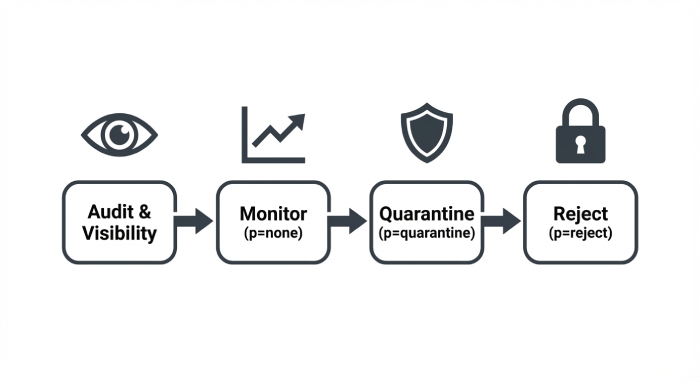
At this stage, if you still go ahead with DMARC enforcement, the risk of disrupting legitimate email increases significantly. If you miss out on even a single legitimate sender or configure it incorrectly, important emails might never reach your recipients.
Now add the human error factor to this. While implementing DMARC, mistakes can easily happen. Let’s say you applied a strict policy like “p=reject” too soon or without full visibility, it can easily block real emails along with malicious ones.
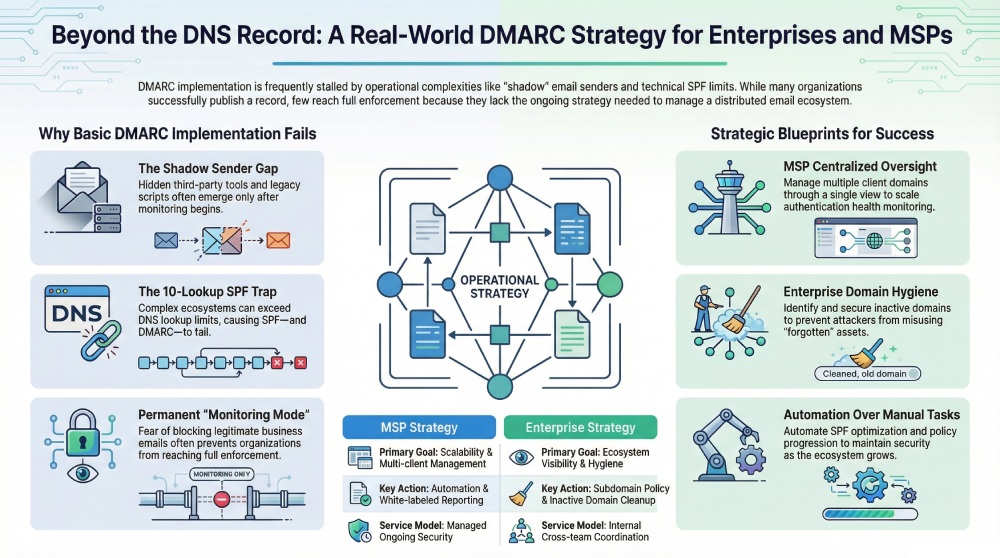
Because of this, many organisations become cautious. Instead of moving towards enforcement, they remain in monitoring mode to avoid business disruptions. Therefore, DMARC ends up being technically implemented but not fully enforced, which leaves the door open for spoofing and phishing attacks.
What do most guides not tell you about DMARC implementation?
Most guides on DMARC deployment stick to the basics and do not tell you enough about why you might be facing deployment struggles after the initial setup. After all, the biggest challenges with DMARC are operational, not theoretical.
You may have more senders than you realise
Most organizations have multiple third-party tools and vendors that send emails on their behalf. Some of these are not properly configured, and some of them are not even properly reviewed. These problems remain hidden until you begin DMARC monitoring.
Old systems still show up
You might still have legacy scripts or old systems that lack a clear owner or documentation. When DMARC monitoring begins, these forgotten senders suddenly reappear and can become a serious risk as you move towards DMARC enforcement.
SPF lookup limit can break enforcement
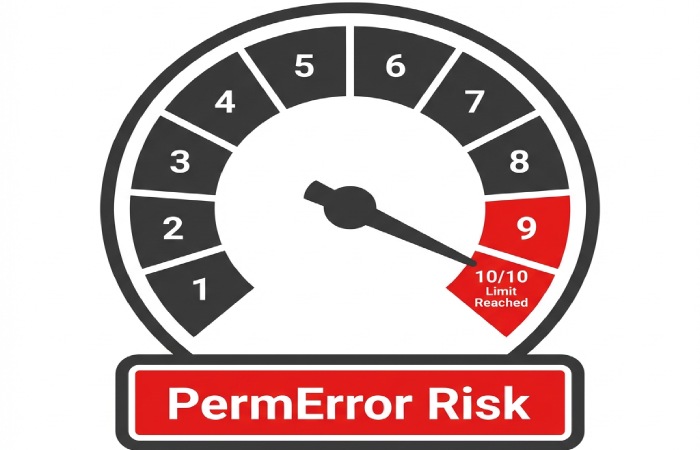
As your email ecosystem becomes more complex, your SPF record grows with it. Adding multiple vendors can push you past the 10 DNS-lookup limit, causing SPF to fail entirely. Since DMARC relies on SPF or DKIM passing, this makes enforcement risky unless the issue is addressed first.
How should you implement DMARC as an MSP?
For MSPs, DMARC implementation is more than just a technical setup for a single domain. You have the responsibility of managing multiple domains of multiple clients.
Here’s how you can do it efficiently and securely:
Opt for centralized oversight
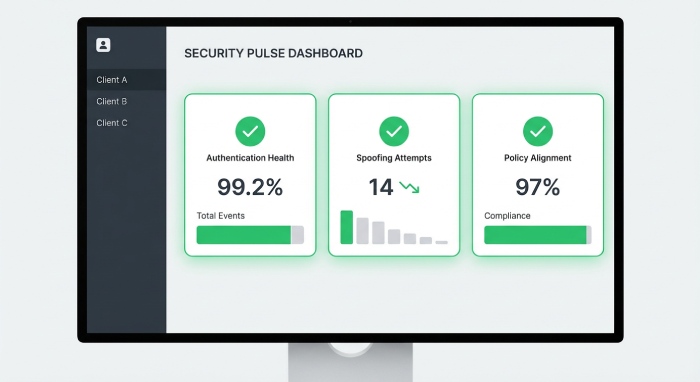
Managing DMARC domain by domain is neither practical nor scalable. You need a centralized view across all client domains to monitor authentication health, spot alignment issues early, and detect spoofing activity before it escalates.
Offer DMARC as a managed service
DMARC works best when it is actively managed and visible to your clients. While you are at it, make sure you position it as an ongoing security service rather than a one-time configuration. You can also use a white-labeled platform to present DMARC under your brand and share clear, professional reports.
Automate wherever possible
It is easy to continue things as they are, but that approach does not scale across multiple clients. This is why it is recommended that you automate tasks like SPF optimization, sender validation, and policy progression.
How should you deploy DMARC as an enterprise?
<img src=“/images/wp/2026/02/spf-permerror-4330.jpg” alt=“Complex Email Ecosystems"" width=“700” height=“382” loading=“lazy” />
Most organizations have complex email ecosystems. If your organization also has multiple sending domains, third-party tools, and internal applications, DMARC cannot be deployed as a one-time configuration.
Here’s how you should go about DMARC implementation:
Remove inactive domains
Large organizations often have old or unused domains from past projects or acquisitions. Even if they do not send an email, attackers can still misuse them. This is why it is important to identify such domains and apply strict DMARC policies to block all unauthorized email from them.
Handle subdomains carefully
Your primary domain and subdomains cannot be handled the same way, especially if you have implemented a strict DMARC policy. It is recommended that you use separate DMARC policies for subdomains lets you secure your main domain without breaking legitimate email.
Add more email security controls
DMARC is a comprehensive security measure, but certainly not the ultimate one. To fully protect your domain against phishing and spoofing attempts, make sure to implement additional measures like enforcing encrypted email connections and monitoring encryption failures to strengthen your overall email security.
Still not sure how to go about DMARC implementation for your organization or your clients? Our team is here to help. Get in touch with us to know more.
Topics
Operations Lead
Operations Lead at DuoCircle. Runs project management, developer coordination, and technical support execution for AutoSPF.
LinkedIn Profile →Fix your SPF record in 60 seconds
Try AutoSPF free for 30 days. No credit card required.
Start Free Trial