What Are The Risks Of Email Spammer Bots, And How To Stop Them?

Quick Answer
It is easy to think that there is a face behind every fake email that lands in your inbox. Perhaps a person sitting in a dim room with a hoodie pulled over their head, the blue glare from their computer screen barely illuminating their face. This is the kind of image we usually associate with spammers and hackers.
 AutoSPF, Automatic SPF flattening What Are The Risks Of Email Spammer Bots, And How To Stop Them? Play Episode Pause Episode
Mute/Unmute Episode Rewind 10 Seconds 1x Fast Forward 30 seconds 00:00 / 1:58
Subscribe Share
RSS Feed Share Link Embed
Download file | Play in new window | Duration: 1:58 | Recorded on April 22, 2026
It is easy to think that there is a face behind every fake email that lands in your inbox. Perhaps a person sitting in a dim room with a hoodie pulled over their head, the blue glare from their computer screen barely illuminating their face. This is the kind of image we usually associate with spammers and hackers.
But the reality is far less dramatic and far more sophisticated than this.
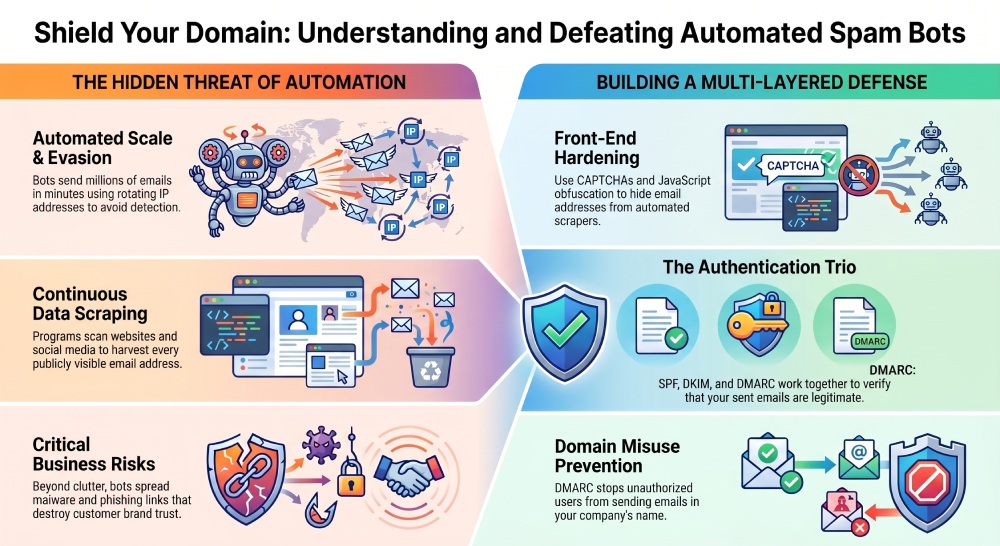
Cybercriminals no longer sit and type every single phishing and spam email. They create bots to do it for them, and that too at scale. These are automated programs that can send millions of emails in a matter of minutes, to millions of different people, all at the same time. And if you try to trace them, you won’t get very far as they constantly switch IP addresses to stay hidden.
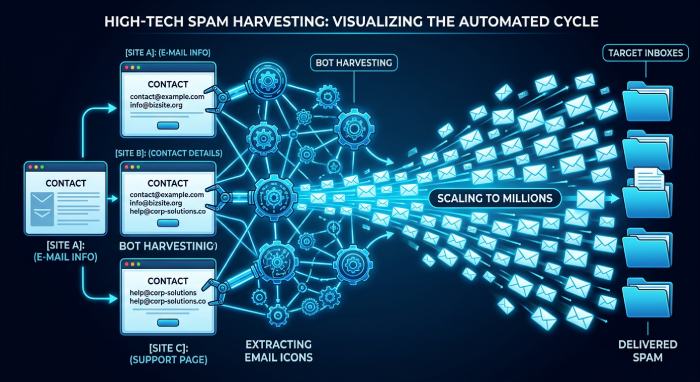
But where do they find such a large database from?
Many of these bots are designed to extract email addresses from websites, social media profiles, online forums, and anywhere else an email address is publicly visible. If your email address is available online, chances are that a bot has already found it.
For businesses, this isn’t just about inbox clutter. Such spam messages flooding your employees’ or your clients’ inboxes means people can start missing important emails or opening the wrong links. If your sales teams start receiving fake inquiries, they may end up wasting time following up on people who do not even exist. And worse, if your customers start receiving junk emails that appear to come from your company, they may stop trusting your brand altogether. Once that trust is lost, it can be very difficult to get back.
Here’s what you should know about email spammer bots and how you can defend against them.
What are email spammer bots?
Also known as spam bots, these are automated programs designed to flood your inboxes with unwanted messages.
So, instead of a person manually curating and sending every email, these bots can send thousands of emails to millions of people all at once_._
While these spam bots send some meaningless and harmless messages, many of them are used for malicious purposes like phishing, spoofing, or malware attacks.
How do these bots work?
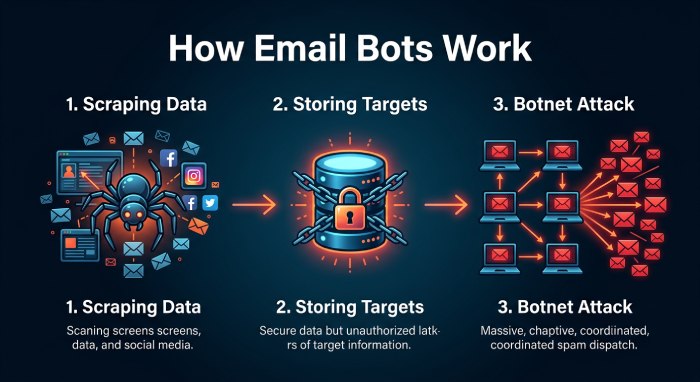
Everything’s there on the internet, and that’s where they find your email addresses.
These bots scan websites, social media profiles, business directories, and any other places where an email address is publicly visible. If your email address is available online, it’s available to the bot.
Once they collect all the addresses of their potential targets, they store them in a database and start sending them emails in bulk.
Some bots go a step further and use stolen passwords to gain access to email accounts. Once they’re able to break into your account, they can easily misuse it to send spam emails, phishing messages, or even collect more data.
Apart from this, some bots also operate through botnets. These are basically large groups of infected computers operated by cybercriminals that can send a large volume of spam emails at the same time. Since these emails come from different computers and IP addresses, it becomes really difficult to trace and stop them.
What are the risks they pose to your business?
The aim of email spammer bots is not to cause your business trouble by creating unnecessary clutter in your clients’ and your team’s inboxes. But their ulterior motive is to steal information, spread malware, or even misuse your company’s name.
One of the biggest risks of these spam bots is phishing. They send emails to your customers that appear to come from your company, even though you never sent them. These emails usually contain malicious attachments or links. If your customers fall for it, they may lose money, share sensitive information, and your company might end up losing their trust.
Another problem that these email spammer bots create is infecting devices with malware. If your team or customers mistakenly download a file included in one of these emails, it can infect their devices with malware, ransomware, or spyware. This can lead to stolen data, locked systems, or even financial loss for the business.
When all of this adds up, the damage goes far beyond annoying emails. You lose resources, your team loses time, your customers’ trust in you is at stake, and your business might face security issues, financial losses, and damage to its reputation.
How can you prevent email spammer bots from targeting your business?
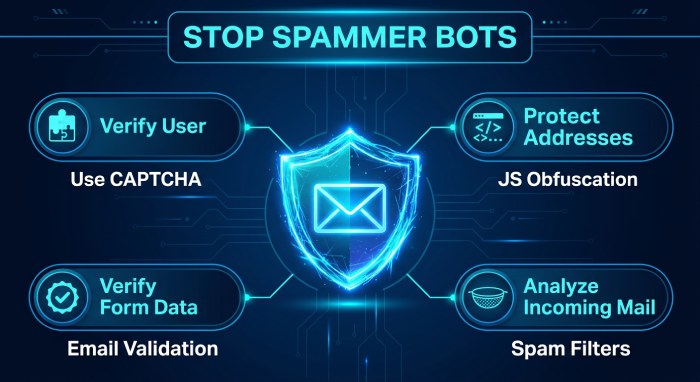
While it is not possible to completely block these spammer bots, you can make it much harder for them to target your business. Here’s how you can effectively do it:
- Make sure to add CAPTCHA to your response forms, sign-up pages, newsletters, and registration pages. This prevents bots from automatically filling out forms or submitting fake information, without making things difficult for legitimate users.
- Hide your email addresses with JavaScript obfuscation. This makes it difficult for bots to scrape your email addresses, while real visitors can still see them properly.
- You can also hide your email addresses from bots by enclosing them within HTML comments.
- It is always a good idea to use tools that validate email addresses while creating forms. This way, bots will not be able to submit fake or invalid email addresses into your contact forms, newsletters, or CRM.
Prevent spammer bots from targeting your business by implementing strong email security measures like spam filters, authentication protocols, and continuous monitoring.
What if prevention is not enough?
These preventive measures work, but only to a certain extent. The real protection comes from ensuring that nobody can misuse your domain to send emails in your company’s name. That’s what DMARC helps you do.
This authentication protocol works with SPF and DKIM to verify whether an email claiming to come from your domain is legitimate. If the email fails these checks, DMARC can stop it from reaching the recipient’s inbox. This prevents cybercriminals from sending phishing emails to your clients and putting your brand’s reputation at stake. You can analyze DMARC reports to see exactly who is sending in your name.
If you haven’t already, now is the right time to get visibility into who is sending emails on behalf of your domain. Start by confirming your record is valid with a free SPF checker. The sooner you implement these authentication protocols, the harder it becomes for attackers to misuse your domain. Just keep your SPF record within the 10 DNS lookup limit so it keeps working.
To know more about protecting your domain using email authentication protocols, reach out to us.
Topics
General Manager
General Manager of DuoCircle. Product strategy and commercial lead for AutoSPF's 2,000+ customer base.
LinkedIn Profile →