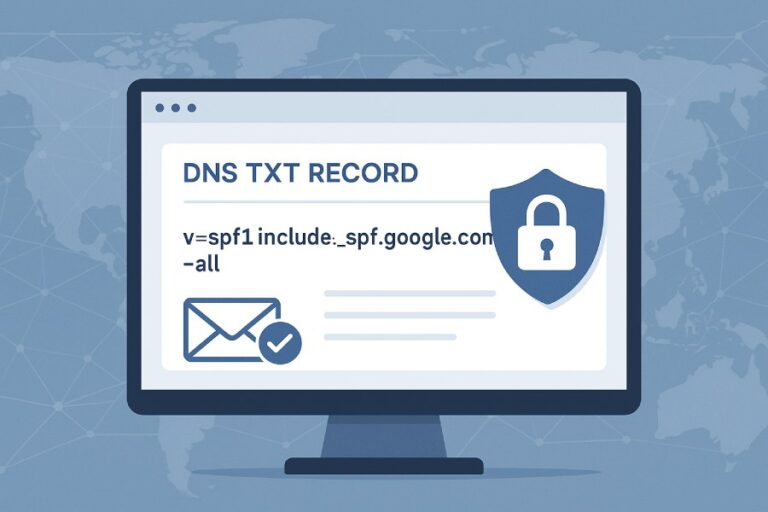
Email deliverability doesn’t happen by accident. Every successful campaign sent through MailerLite depends on proper email authentication behind the scenes — and at the core of that authentication are SPF and DKIM.
At AutoSPF, we see countless domains struggle with poor inbox placement, spam filtering, or outright rejection simply because their SPF and DKIM records weren’t configured correctly. Even a small misstep in DNS can lead to failed authentication checks that mailbox providers treat as red flags.
In this guide, AutoSPF walks you through MailerLite SPF and DKIM configuration from start to finish, explaining not just how to set it up, but why each step matters. This article is designed for marketers, IT teams, and domain owners who want reliable email delivery without breaking existing mail services.
Why SPF and DKIM Matter for MailerLite
Mailbox providers like Gmail, Outlook, and Yahoo rely on authentication checks to determine whether an email is legitimate or potentially malicious. When you send campaigns through MailerLite, those messages must pass two critical checks:
- SPF (Sender Policy Framework) verifies who is allowed to send emails on behalf of your domain
- DKIM (DomainKeys Identified Mail) verifies that the email hasn’t been altered in transit and truly came from your domain
Without these records properly configured, MailerLite emails may fail authentication, land in spam, or be blocked entirely.
From AutoSPF’s experience, SPF and DKIM are not optional — they’re the foundation of modern email delivery.
Understanding SPF for MailerLite
SPF works by publishing a DNS record that lists all authorized sending sources for your domain. When MailerLite sends an email using your domain, the receiving server checks your SPF record to confirm that MailerLite is permitted to send on your behalf.
If MailerLite is missing from your SPF record, authentication fails.
How SPF Works at a High Level
- You publish an SPF record in DNS
- MailerLite sends an email using your domain
- The receiving server looks up your SPF record
- If MailerLite is authorized → SPF passes
- If not → SPF fails

Simple in theory — but mistakes are common in practice.
MailerLite SPF Requirements
MailerLite requires that its sending infrastructure be explicitly authorized in your SPF record. This is usually done using an include mechanism, which references MailerLite’s SPF policy.
However, SPF has a strict technical limit: no more than 10 DNS lookups are allowed. This is where many domains run into trouble — especially those using multiple email services alongside MailerLite.
AutoSPF frequently encounters domains that exceed this limit due to stacked includes from CRMs, support tools, and marketing platforms.
How to Add MailerLite to Your SPF Record
Before making any changes, AutoSPF strongly recommends checking whether your domain already has an SPF record. Most domains do.
Step 1: Locate Your Existing SPF Record
Your domain should have only one SPF record. Creating multiple SPF records will cause authentication failures.
A typical SPF record starts like this:
v=spf1
If you already see one in DNS, you must modify it, not create a new one.
Step 2: Add MailerLite to the SPF Record
MailerLite provides an SPF include value that must be added to your existing record. This tells receiving servers that MailerLite is an approved sender.
Your updated SPF record should still contain:
- Your existing mail providers (Google Workspace, Microsoft 365, etc.)
- The MailerLite include
- A single enforcement mechanism (~all or -all)
AutoSPF emphasizes that order matters and that includes should be carefully managed to avoid lookup limits.
Step 3: Save and Publish the Record
Once updated, save the record in your DNS provider. SPF propagation can take anywhere from a few minutes to several hours, depending on TTL values.
Common SPF Mistakes AutoSPF Sees with MailerLite
Over the years, AutoSPF has identified recurring SPF issues that affect MailerLite users:
❌ Multiple SPF Records
Only one SPF record is allowed per domain. Multiple records cause SPF to fail entirely.
❌ Exceeding the 10-Lookup Limit
Each include, a, mx, or redirect counts toward the limit. Exceeding it results in a PermError, which mailbox providers treat as a failure.
❌ Removing Existing Senders
Accidentally deleting another mail service from SPF can break transactional or support email flows.
❌ Incorrect SPF Syntax
Even a missing space can invalidate the entire record.
AutoSPF exists specifically to solve these problems by flattening and optimizing SPF records automatically.

Understanding DKIM for MailerLite
While SPF validates who can send, DKIM validates message integrity and domain ownership.
MailerLite uses DKIM to sign outgoing messages with a cryptographic key that corresponds to a public key published in your DNS.
When a mailbox provider receives a MailerLite email:
- It retrieves your DKIM public key from DNS
- It verifies the DKIM signature
- If the signature matches → DKIM passes
This process builds trust and significantly improves inbox placement.
Why DKIM Is Critical for Campaign Emails
AutoSPF consistently sees better deliverability for domains with DKIM enabled because:
- DKIM protects against message tampering
- It proves domain alignment
- It supports downstream DMARC enforcement (even if DMARC isn’t configured yet)
Many mailbox providers give DKIM more weight than SPF for bulk and marketing emails.
How to Configure DKIM in MailerLite
MailerLite makes DKIM setup straightforward, but DNS accuracy is critical.
Step 1: Access Domain Authentication in MailerLite
Inside your MailerLite dashboard:
- Navigate to domain authentication
- Select the domain you’re sending from
- Choose the option to configure DKIM
MailerLite will generate DKIM records specific to your domain.
Step 2: Add DKIM Records to DNS
MailerLite typically provides CNAME or TXT records that must be added exactly as shown.
AutoSPF recommends:
- Copying values carefully
- Avoiding extra spaces
- Ensuring hostnames are entered correctly (especially subdomains)
DKIM records are highly sensitive to formatting errors.
Step 3: Verify DKIM in MailerLite
Once the records are published:
- Return to MailerLite
- Click “Verify” or “Authenticate”
- Wait for confirmation
Propagation may take time, so verification might not be immediate.
Common DKIM Issues AutoSPF Encounter
Even though DKIM is simpler than SPF, issues still arise:
❌ Incorrect Hostnames
Some DNS providers auto-append the domain, leading to malformed records.
❌ Quotation Mark Errors
Extra or missing quotes can invalidate DKIM TXT records.
❌ DNS Propagation Delays
Verification failures are often timing-related rather than configuration-related.
AutoSPF recommends waiting at least 30–60 minutes before rechecking DKIM status.

SPF and DKIM Together: Why Both Matter
Some senders assume SPF alone is enough. Others rely only on DKIM. In reality, both should be configured.
Mailbox providers evaluate authentication holistically:
- SPF proves authorization
- DKIM proves authenticity
- Together, they establish trust
AutoSPF strongly advises configuring both before sending large MailerLite campaigns.
How AutoSPF Simplifies MailerLite SPF Management
While DKIM setup is largely manual, SPF complexity grows over time as more services are added.
AutoSPF solves common SPF challenges by:
- Automatically flattening SPF records
- Preventing lookup limit failures
- Keeping MailerLite authorized without manual edits
- Protecting existing mail flows
For domains running MailerLite alongside CRMs, support tools, and transactional email services, AutoSPF ensures SPF stays compliant and reliable.

Final Thoughts from AutoSPF
MailerLite is a powerful email marketing platform — but its performance depends heavily on correct SPF and DKIM configuration.
To summarize:
- SPF authorizes MailerLite to send on your behalf
- DKIM cryptographically verifies message authenticity
- Both must be published correctly in DNS
- Mistakes can silently damage deliverability
- Ongoing SPF management is critical as your stack grows
At AutoSPF, we believe authentication should be reliable, scalable, and stress-free. Whether you’re sending your first MailerLite campaign or managing complex multi-sender domains, proper SPF and DKIM setup is the foundation of email success.