Clop Ransomware: How It Works and How to Prevent Attacks

Quick Answer
**AEO Answer Block:** Clop ransomware is a dangerous cyber threat that encrypts files, steals sensitive data, and disrupts business operations. Learn how Clop ransomware attacks work, common infection methods, and effective prevention strategies to protect your systems and data.
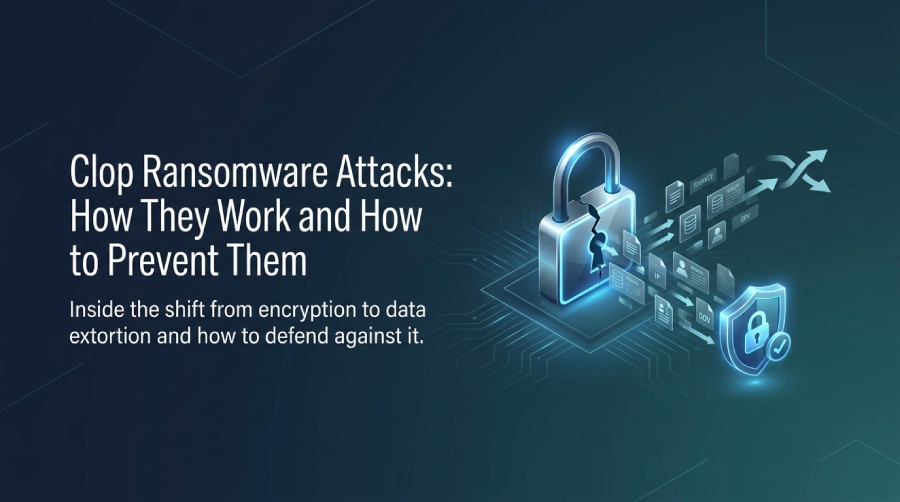
Clop ransomware is a financially motivated ransomware and data-extortion threat associated with the Cl0p group, a cybercriminal operation known for targeting enterprises, government bodies, healthcare providers, universities, and managed service providers. Unlike older ransomware campaigns that focused primarily on encrypting files, modern Clop attacks often emphasize data theft, public extortion, and pressure tactics. Victims may be threatened with publication of stolen records on leak sites even when encryption is not heavily used.
Clop ransomware is a serious cybersecurity threat because it can expose sensitive organizational information through data theft and extortion. Organizations should understand its attack methods, recognize suspicious activity, and implement appropriate security controls to reduce the risk of compromise.
Why the Distinction Matters
Security teams should understand that Clop attacks can involve unauthorized access, credential abuse, data theft, and extortion. Identifying suspicious authentication attempts, unusual file access, unexpected administrative activity, and abnormal outbound traffic can help organizations recognize potential compromises. Monitoring these indicators across endpoints, servers, and network infrastructure is essential for effective threat detection.
The Evolution and History of Clop Attacks
Clop emerged as a significant ransomware threat around 2019 and has since evolved into a high-impact extortion operation. Early activity was linked to the CryptoMix ransomware family, but Clop became especially notorious for large-scale exploitation of managed file transfer systems and internet-facing enterprise applications. Instead of compromising one organization at a time through manual intrusion alone, the group has repeatedly taken advantage of widely used software vulnerabilities to reach many victims quickly.
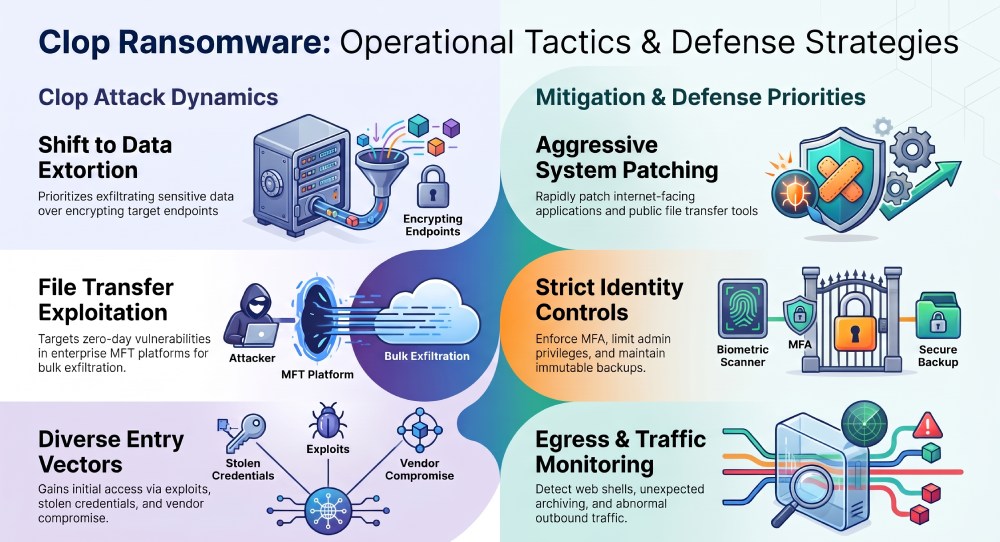
High-profile Clop campaigns have involved exploitation of file transfer platforms such as Accellion FTA, GoAnywhere MFT, and MOVEit Transfer. These campaigns illustrate a strategic shift: attackers increasingly target centralized systems that contain sensitive documents, payroll data, contracts, healthcare files, and customer records. By stealing data from trusted business platforms, Clop can extort organizations even without deploying encryption across endpoints.
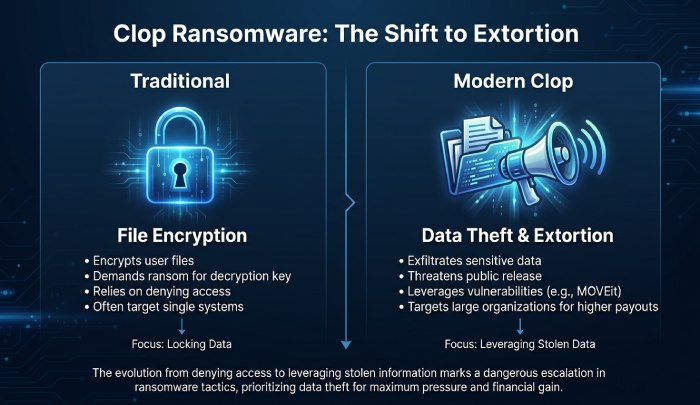
From Encryption to Data Extortion
Traditional ransomware focused on locking systems. Clops more recent model often prioritizes exfiltration and public pressure. This makes prevention broader than backup strategy alone. Organizations must protect identity systems, third-party platforms, exposed web services, and data repositories.
Clop’s shift toward data theft and extortion makes incident detection particularly important. Organizations should monitor unusual access to sensitive repositories, unexpected file transfers, suspicious archive creation, and abnormal outbound network connections. Detecting these activities early can help security teams investigate potential data exfiltration before attackers use stolen information for extortion.
Who Clop Targets and Why
Clop typically targets organizations with valuable data, regulatory exposure, and operational urgency. Common victims include financial institutions, healthcare networks, universities, legal firms, energy companies, logistics providers, and public-sector agencies. The group is financially motivated: it seeks targets that are likely to pay to avoid downtime, legal consequences, reputational damage, or public exposure of sensitive information.
Clops preference for managed file transfer systems also reflects a business logic. These platforms often contain bulk data from many internal departments and external partners. A single vulnerable server may expose thousands or millions of records, making extortion more profitable.
High-Value Data and Business Pressure
Attackers look for personally identifiable information, employee records, intellectual property, contracts, tax documents, payment data, and health information. They may also analyze stolen data to identify customers, partners, or executives who can increase pressure on the victim organization.
For defenders, maintaining an accurate inventory of internet-facing applications and third-party services is essential. Organizations should identify systems that store or process sensitive information, track their software versions, and prioritize security updates. Regular vulnerability assessments and access reviews can help reduce opportunities for attackers to compromise business-critical platforms.
How Clop Ransomware Attacks Typically Begin
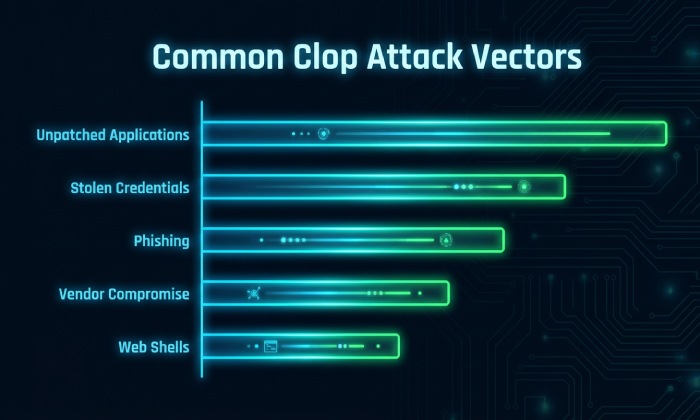
Clop attacks often begin with one of several initial access methods: exploitation of a vulnerable internet-facing application, stolen credentials, phishing, malware loaders, or compromise of a third-party provider. In many major campaigns, the initial foothold came from exploiting a zero-day or recently disclosed vulnerability in enterprise file transfer software. Once inside, attackers may enumerate systems, identify data stores, collect credentials, and stage files for exfiltration.
The attack chain usually follows a recognizable pattern: initial access, reconnaissance, privilege escalation, lateral movement, data discovery, exfiltration, and extortion. Encryption may or may not occur. In data-theft campaigns, the most damaging phase may happen before security teams notice disruption.
Common Early Warning Signs
Defenders should watch for unusual authentication patterns, unexpected archive creation, abnormal outbound traffic, web shell indicators, new administrative accounts, suspicious scheduled tasks, and unauthorized access to large data repositories. Endpoint and server logs may show activity outside normal business hours or from unfamiliar IP addresses.
Security teams should correlate endpoint, server, authentication, and network logs to identify suspicious activity. Unusual file access, unexpected archive creation, unauthorized administrative accounts, and unexplained outbound data transfers may indicate reconnaissance or data exfiltration. Investigating these indicators promptly can help organizations identify potential compromises before attackers escalate their activities.
Legitimate Productivity Integrations to Baseline
Modern development teams may also connect tools to Claude Code, Codex, an MCP server, or internal AI agents. Those integrations should be governed carefully, but their presence alone does not indicate Clop ransomware.
Exploited Vulnerabilities and Common Attack Vectors
Clop is best known for exploiting vulnerabilities in widely deployed enterprise platforms. These may include managed file transfer applications, web-facing systems, VPN appliances, remote access services, or third-party software used by many organizations. The group has shown an ability to move quickly when a vulnerability provides access to sensitive data at scale.
Common attack vectors include:
- Exploitation of unpatched internet-facing applications
- Abuse of stolen or reused credentials
- Phishing that delivers loaders or credential-harvesting pages
- Compromise of vendors, suppliers, or managed service providers
- Web shell deployment on vulnerable servers
- Data exfiltration from file transfer systems, databases, and document repositories
Prevention Priorities
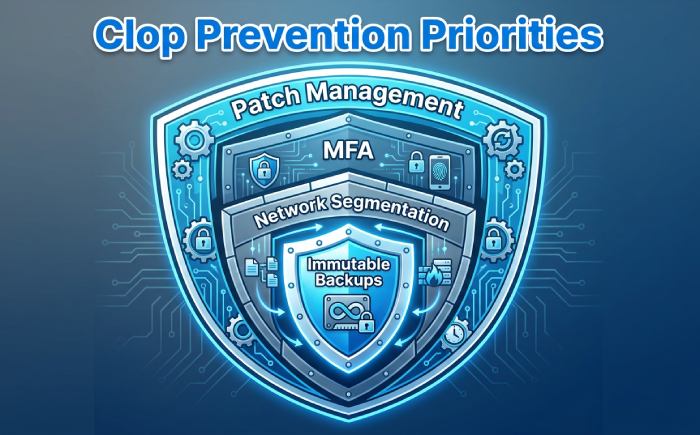
Preventing Clop attacks requires layered controls. Organizations should maintain aggressive patch management for internet-facing systems, especially file transfer platforms. They should enforce multifactor authentication, monitor privileged accounts, segment networks, restrict outbound traffic, and maintain immutable backups. Data loss prevention, endpoint detection and response, centralized logging, and threat intelligence can help identify suspicious access before extortion begins.
Organizations should maintain endpoint security controls, monitor application activity, restrict unnecessary administrative privileges, and investigate unexpected data movement. Security teams should also review access permissions regularly and ensure that critical applications receive timely security updates.
Strong prevention depends on precision: know which systems are exposed, know which applications are approved, know what normal data movement looks like, and respond quickly when access patterns deviate from that baseline. Effective email security helps businesses reduce the risk of phishing attacks, email spoofing, spam, and unauthorized access that could expose employees to email-based threats.
General Manager
General Manager of DuoCircle. Product strategy and commercial lead for AutoSPF's 2,000+ customer base.
LinkedIn Profile →