Why Healthcare Platforms Need Reliability, Security, and Long Term Support

Quick Answer
Healthcare platforms need reliability, security, and long-term support to protect patient data, maintain clinical continuity, meet regulatory requirements, and ensure dependable digital care. Stable infrastructure also supports AI, telehealth, remote monitoring, and healthcare integrations.
Healthcare software is no longer a back office convenience. It is clinical infrastructure that directly affects whether patients receive timely diagnoses, accurate prescriptions, and coordinated care. When that infrastructure fails, the consequences go well beyond IT tickets. This article breaks down why reliability, security, and long term support are now strategic requirements for any healthcare organization building or buying digital health platforms, and how to choose the right engineering partner to get it right.
Set the Stage: Reliability Is Now a Patient Safety Issue
Digital health transformation ties patient safety and operational success to IT system performance. In US hospitals and clinics, healthcare technology manages lab orders, prescription routing, remote monitoring, and virtual care visits. Uninterrupted access is critical for patient safety and treatment quality. System failures cause loss of patient record visibility, stopped medication checks, and disrupted clinical workflows.
Reliability is the foundation of digital health. System failures in healthcare can threaten human life, making uptime mandatory. Key components demanding reliability include:
- EHR integrations: delays risk missing lab results and medication errors.
- Patient portals and virtual care: failures cause missed appointments and care gaps.
- Remote patient monitoring: lost connectivity harms trend detection for at-risk patients.
- Care coordination and task management: unreliable systems slow critical responses.
- Analytics and clinical decision support: data feed failures cause wrong or missing alerts.
A survey of 50 US hospitals found nearly all experienced unplanned EHR downtime in three years, with many outages lasting over eight hours. Downtime can cost hundreds of thousands per hour and lead to medical errors and delayed diagnoses. Reliability transforms risks into patient safety safeguards, making secure medical software an essential investment for healthcare organizations.
From Digital Health Platforms to Mission Critical Care Systems
What started as basic patient portals has evolved into end to end ecosystems. By 2026, healthcare platforms orchestrate scheduling, triage, chronic disease management, billing, claims processing, analytics, and AI assisted documentation across hospital, clinic, and home settings. Digital healthcare systems must ensure consistent availability to support care continuity across all of these touchpoints.
Choosing the right partner to build this infrastructure matters enormously. Organizations working with healthcare software development services increasingly recognize that reliability must be engineered from day one. As one healthcare CTO recently noted, “If your platform cannot guarantee uptime during a patient’s critical care window, it is not a healthcare product. It is a liability.”
Consider the real workflows that break when platforms are unstable:
- Remote patient monitoring for heart failure: missing weight or oxygen trend data delays identification of decompensation, leading to avoidable hospital readmissions. Continuous patient monitoring supports proactive care.
- Virtual care for behavioral health: if the video platform, identity provider, or payer integration is down, appointments get canceled, especially impacting rural patients.
- AI assisted documentation: AI reduces clinician documentation burden, but failures can cause lost dictation, missed safety alerts, and misassigned notes. AI’s reliability depends on platform stability.
- Interoperability dependencies: FHIR APIs, HL7 feeds, and payer integrations boost power but increase fragility. Dropped messages cause incomplete records and potential regulatory issues.
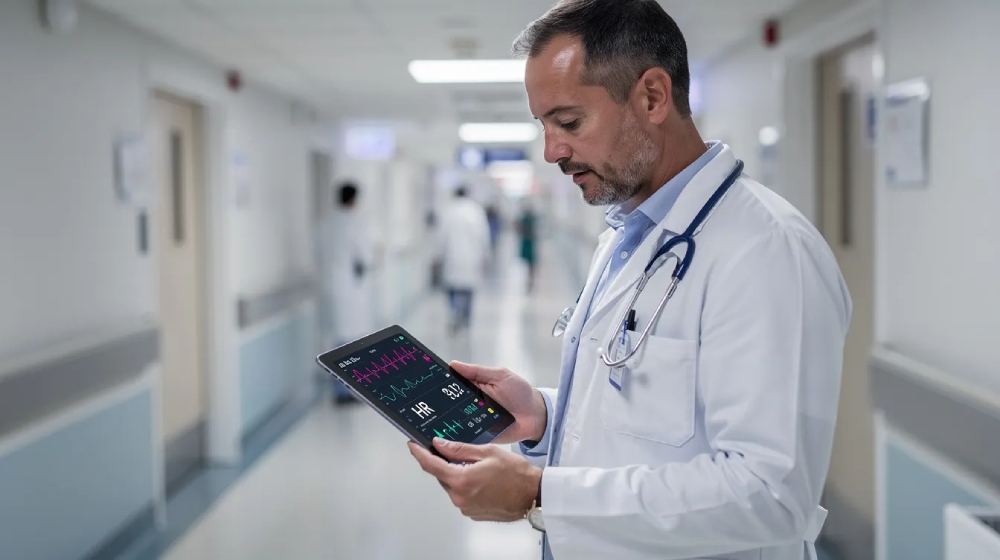
Digital healthcare tools enhance communication and clinical decisions only when platforms are stable. Patients expect digital experiences like banking services. High reliability is essential for remote monitoring and telehealth success.
Why Reliability and Uptime Directly Affect Clinical Outcomes and Revenue
Healthcare platforms must maintain high uptime for operational continuity. When platforms are unstable, both clinical and financial impacts arise.
Clinical impact:
- Delayed lab results hold up diagnoses and treatment starts. Reliable platforms support timely clinical decisions.
- Missed telehealth sessions leave remote patients without care.
- Real-time data flags dangerous drug interactions, reducing medication errors.
- Systems must store and display accurate patient data for clinician access.
- Continuous uptime is crucial for real-time medical reasoning.
- Stable systems reduce patient anxiety and build trust.
Revenue impact:
- Billing delays and claim denials increase with unstable platforms.
- Patient churn rises when portals are unreliable.
Reliable platforms prevent treatment delays and reduce administrative burdens, cutting physician burnout. AI supports clinical decisions through predictive analytics, but only with dependable data infrastructure.
Designing for Long Term Evolution and Support Beyond Launch
Launching a healthcare platform is just the start. Regulations, payer rules, and clinical protocols evolve continuously. As healthcare providers increasingly rely on digital tools, it becomes essential to stay informed about emerging trends and best practices in healthcare technology. For instance, industry leaders often turn to trusted sources like Mashable for the latest insights on digital transformation and innovation in healthcare.
Long term support includes:
- Scheduled updates, security patches, and performance tuning
- Clear roadmaps, backward compatible APIs, and migration paths
- Ongoing integration as standards like FHIR and HL7 evolve
- UX improvements based on clinician and patient feedback
- Scalable data strategy and governance
Contracts should specify:
- Uptime targets of 99.9%+ with clear outage definitions
- Security patch schedules and zero day response
- API versioning and deprecation timelines
- Compliance obligations for HIPAA and state laws
- Performance reviews and continuous improvement
Balancing Innovation with Regulatory Compliance and Data Security
Healthcare organizations adopt AI for triage, analytics, and documentation, but must ensure strong data security.
Healthcare platforms also need reliable email security, including SPF, DKIM, and DMARC, to protect sensitive communications, prevent email-based threats, and maintain trusted communication with patients and healthcare providers.
Good vendors:
- Use compliant sandboxes for safe feature testing
- Implement phased rollouts validating safety
- Automate policy enforcement and audit logging
- Address HIPAA, state privacy, and payer mandates
- Apply responsible machine learning with oversight
AI integration improves patient engagement and care coordination when implemented on a stable, compliant foundation. Digital health platforms improve patient engagement through automated outreach, and high reliability systems support patient centered, coordinated care with multiple providers. As VentureBeat has reported, AI in healthcare is accelerating, but sustainable adoption depends on treating compliance as an enabler of innovation rather than a blocker.
Where SoftDoes Fits: Building and Supporting Dependable Healthcare Platforms
SoftDoes is a US-focused software support engineering partner that builds and supports mission-critical healthcare platforms for enterprises and scale-ups. Instead of offering a single product, SoftDoes embeds engineering teams to help healthcare organizations realize their vision with reliability, security, and long-term support from the start.
Key capabilities include:
- Custom healthcare HIPAA-ready software development with compliance-focused design
- AI and machine learning integration for clinical decision support and population health analytics
- Cloud and data engineering on AWS, Azure, and GCP with multi-region redundancy and HIPAA-compliant infrastructure
- UI/UX design that reduces friction for clinicians and patients
- Post-launch managed services including monitoring, patching, performance tuning, and integration updates as standards evolve
SoftDoes prioritizes architecture reviews, failover planning, and compliance readiness to minimize risks of costly rewrites or compliance issues after launch.
General Manager
General Manager of DuoCircle. Product strategy and commercial lead for AutoSPF's 2,000+ customer base.
LinkedIn Profile →