
With cyberattacks becoming so severe and sophisticated, your organization cannot afford to leave its email ecosystem inadequately protected. Moreover, since email is one of the most common targets for these attackers, it becomes all the more important to properly protect your entire environment.
One of the most effective ways to protect your outgoing emails is by implementing proper email authentication. Authentication protocols such as SPF and DKIM help establish trust between your domain and email providers by confirming that your emails are legitimate and authorized. And if the receiving servers trust your emails, they will ensure that they are delivered directly to the recipients’ inboxes rather than their spam folders.

But remember, this trust depends on how correctly you authenticate your domain. Even a minor misconfiguration in SPF or DKIM can cause email providers to lose confidence in your messages, leading to poor deliverability. This means you cannot simply set up authentication once and assume your emails will always reach the inbox.
Let’s now understand the most common SPF and DKIM misconfigurations that hurt email deliverability.
What are the common SPF and DKIM misconfigurations that impact deliverability?
You might have configured your email-sending domain with SPF and DKIM, yet your emails are not reaching recipients’ inboxes. This often happens because SPF or DKIM is not configured correctly, or because certain sending sources are missing or misaligned. In such cases, the receiving servers are not able to properly verify your emails and may treat them as untrusted, causing them to be filtered as spam or rejected altogether.
Here are some of the common SPF and DKIM misconfigurations that impact email deliverability.
SPF misconfigurations
- Multiple records published
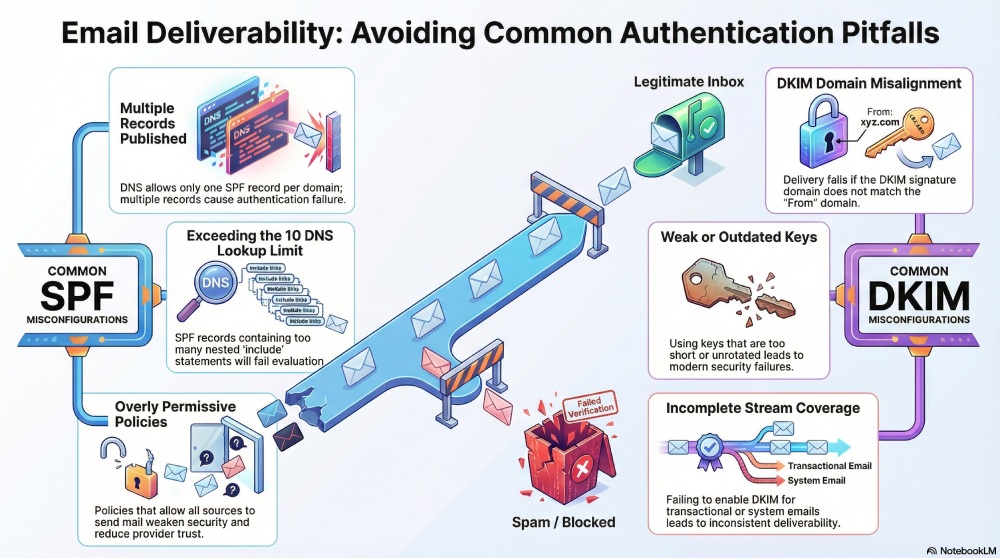
SPF only allows you to publish one record per domain in your DNS. And it is only this record that should include authorized email-sending sources for the domain. But if you publish multiple records for the same domain, the receiving server will not be able evaluate them properly, causing SPF authentication to fail and negatively affecting email deliverability.

- Your SPF record exceeds the 10 DNS lookup limit
SPF checks are limited to a maximum of 10 DNS lookups. When your SPF record contains too many ‘include’ mechanisms or nested ‘include’ statements, this limit can be exceeded. When that happens, SPF evaluation fails, and receiving servers are unable to verify your sending sources, which can hurt email deliverability.
- You have missed out on adding legitimate sending sources
Another common reason why your legitimate emails don’t reach the recipients’ inboxes is that you missed out on including those authorized addresses to your SPF record. This often happens when you add new tools, platforms, or services to your ecosystem without updating the SPF record. As a result, legitimate emails may be marked as spam or rejected.

- You’re using an overly permissive SPF policy
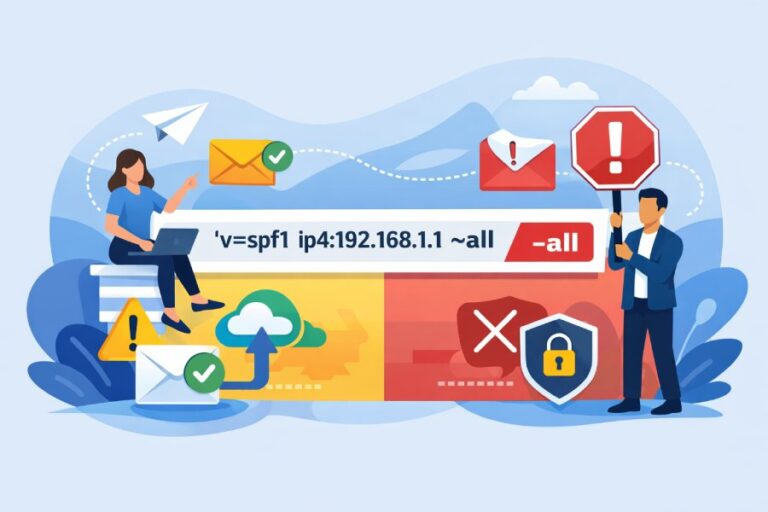
The SPF policy tells the receiving servers which sources are allowed to send emails on behalf of your domain. If you set your SPF policy to be too permissive (the one that allows all sources to send emails), it defeats the purpose of SPF. Such configurations weaken your domain’s security and reduce trust with email providers.
DKIM misconfigurations that impact deliverability
- You have not enabled DKIM for all email streams
It is important that you enable DKIM for all emails sent from your domain, whether marketing, transactional, or system notifications. If you enable DKIM selectively for some emails, others might fail authentication, leading to inconsistent deliverability.
- DKIM is misaligned
Your email might technically pass DKIM, yet chances are it might not reach the recipient. This happens when the domain used in the DKIM signature does not match the “From” domain. In such cases, email providers treat the email as untrustworthy, regardless of whether it has passed the DKIM check.
- Your DKIM keys are weak or outdated
If you haven’t updated or rotated your DKIM keys in a while, the receiving server might see your email as untrustworthy. As email providers continue to strengthen their security standards, using weak DKIM keys can lead to authentication failures or reduced deliverability. So, if your DKIM keys are too short or too old, your emails may be filtered as spam or fail to reach recipients’ inboxes.
- There might be problems with DKIM Selector Rotation
DKIM selector rotation means changing your DKIM keys from time to time. Problems happen when old selectors are removed too early or when new selectors are not set up correctly.
When this happens, email servers cannot verify your DKIM signature. As a result, your emails may fail authentication and end up in spam or not get delivered at all.
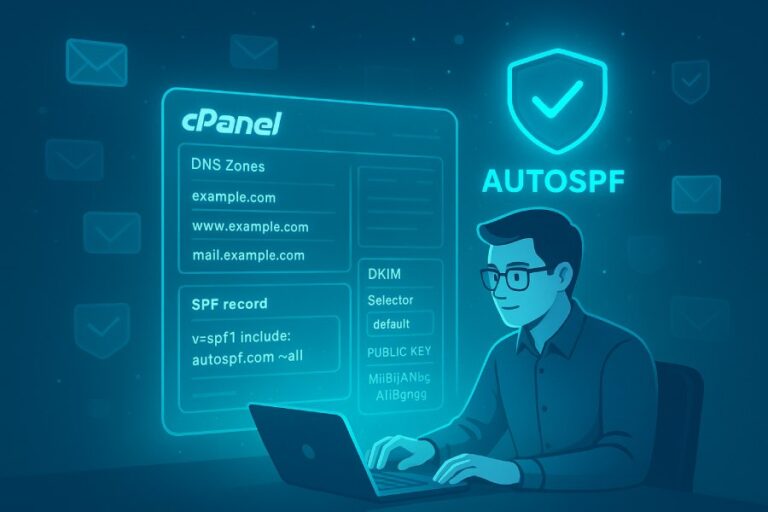
DKIM keys, SPF, DMARC, and AutoSPF work together to authenticate senders and prevent email spoofing.
It is clear that simply setting up email authentication protocols is not enough to protect your domain and ensure consistent inbox placement. You need to regularly review, update, and maintain your authentication setup to avoid misconfigurations that can hurt deliverability. To know more about setting up and maintaining SPF, DKIM, and DMARC for your domain, get in touch with us!